

Opening Hours Mon - Fri: 8:00 AM - 3:00 PMSat - Sun: Closed
New Orleans’ Trusted Renovation Experts — Transform Your
Home with Confidence- Get Your Free Estimate
Opening Hours Mon - Fri: 8:00 AM - 3:00 PMSat - Sun: Closed

Talk to an Expert504-294-8616
Opening Hours Mon - Fri: 8:00 AM - 3:00 PMSat - Sun: Closed

What You Need to Know
In New Orleans, Louisiana, composite decking outlasts pressure-treated wood in every climate condition that matters in IECC Climate Zone 2A: sustained humidity, Formosan subterranean termite pressure, UV exposure, and seasonal storm cycles. Big Easy Renovations builds outdoor decks across Greater New Orleans, Metairie, Kenner, and surrounding parishes, and composite typically survives 25 to 30 years in this climate while standard pressure-treated wood averages 10 to 15 years before structural deterioration forces replacement. The upfront cost gap narrows considerably over a 15-year window once annual staining, sealing, and board replacements are counted in wood’s real price. For most New Orleans homeowners, composite is the stronger long-term investment, though sourced old-growth Louisiana cypress remains a genuine exception when it can be found.
Last Updated: July 2026
Composite decking lasts two to three times longer than pressure-treated wood in New Orleans because outdoor deck construction in this climate faces a combination of stressors that most U.S. markets do not. IECC Climate Zone 2A delivers heat, near-daily humidity above 75%, Formosan termite pressure, and rainfall averaging 62 inches per year, and each of those conditions accelerates every failure mode that wood is vulnerable to. Big Easy Renovations, licensed by the Louisiana State Licensing Board for Contractors (LSLBC) under Residential License #890459, installs both material types across Orleans Parish, Jefferson Parish, and the North Shore, and the material choice is the single biggest factor in how long a deck survives before it needs to be rebuilt.
The renovation team at Big Easy Renovations works across outdoor kitchens, patios, ironwork, siding, and roofing alongside deck construction, which means the crews see how different materials hold up years after installation throughout Greater New Orleans. The comparison below covers durability, cost, maintenance burden, heat performance, termite exposure, and the permit requirements that Orleans Parish and Jefferson Parish impose on new deck construction.
Pressure-treated wood absorbs moisture in humid conditions, and in New Orleans that process starts immediately after installation. Repeated wet-dry cycles during Louisiana summers cause wood fibers to swell and contract, which leads to surface cracking, warping, and in poorly maintained boards, internal rot within three to five years. Without annual staining and sealing, pressure-treated boards in Zone 2A turn gray and begin splitting in roughly 18 months of exposure.
Cedar and redwood resist moisture better than pressure-treated pine because their natural oils slow water absorption, but neither species grows in Louisiana and both arrive at significant import cost. Well-maintained pressure-treated wood decks in New Orleans typically require full replacement after 10 to 15 years, compared to the national average of 15 to 20 years in drier regions, per Consumer Reports 2026 testing benchmarks.
The one wood exception worth understanding is old-growth Louisiana cypress (Taxodium distichum, Louisiana’s state tree). Original cypress heartwood contains a natural preservative oil called cypressene, which gives old-growth timber a durability rating of durable to very durable against decay, according to the Wood Database. That is why many New Orleans shotgun houses and Creole cottages still have original cypress porch elements after more than 100 years. The critical point for anyone pricing a new deck: commercially available cypress today comes from younger plantation-grown trees that do not contain the same cypressene density. New-growth cypress performs closer to a standard softwood than to its historic reputation, and sourcing genuine old-growth material requires a specialty supplier and commands a significant price premium.
Capped composite decking resists the four primary failure modes that destroy wood in New Orleans: moisture absorption, rot, mold growth, and insect damage. The polymer cap encasing the composite core prevents water from penetrating the board, which eliminates the swell-and-contract cycle that splits wood. Most manufacturers back capped composite with 25-year warranties, and premium product lines carry warranties up to 50 years, reflecting actual performance data in humid coastal markets.
For homeowners weighing options on a New Orleans outdoor living project, here is what capped composite delivers compared to standard pressure-treated wood:
Uncapped composite, an older product type still sold at some retailers, does not carry the moisture and mold advantages listed above. When specifying composite for a New Orleans deck, confirming the product is a fully capped board is non-negotiable in Zone 2A conditions.
Composite costs more upfront but closes the gap against wood within roughly nine years when maintenance expenses are included. The table below uses installed price ranges verified against 2026 New Orleans market data.
| Cost Factor | Pressure-Treated Wood | Capped Composite |
|---|---|---|
| Installed cost (300 sq ft deck) | $6,000 to $10,500 | $9,000 to $15,000 |
| Annual maintenance (staining, sealing) | $300 to $600 per year | $30 to $70 per year |
| Typical lifespan in New Orleans | 10 to 15 years | 25 to 30 years |
| Replacement cost within 15-year window | Full deck rebuild required | Usually none |
| Estimated 10-year total cost | $9,000 to $16,500 | $9,300 to $15,700 |
By year nine in most scenarios, cumulative maintenance costs on a wood deck push total spending close to or past the composite option’s starting price. Homeowners who plan to remain in their homes for more than a decade almost always find composite to be the more economical choice in this climate, per 2026 analysis published by Modern Renovations.
South Louisiana contains the largest single concentration of Formosan subterranean termites in the United States, according to the LSU AgCenter. The Formosan subterranean termite (Coptotermes formosanus) arrived through the Port of New Orleans after World War II and has since established dense colonies throughout Orleans Parish, Jefferson Parish, and surrounding areas. A mature Formosan colony can consume as much as 13 ounces of wood per day and cause severe structural damage to a deck in as little as three months, a rate of destruction that far exceeds what native subterranean termites produce in most other U.S. regions.
Pressure-treated lumber resists termite penetration when the preservative chemicals are fresh, but those chemicals leach out in wet outdoor conditions over seven to ten years. Once treatment degrades, the wood becomes fully vulnerable. Composite decking does not present this vulnerability because its low cellulose content gives Formosan termites no food source worth targeting. This single factor makes composite a structurally stronger choice in South Louisiana than it would be in most other markets where the two materials are routinely compared.
Composite decking does get hot in direct sunlight, and in New Orleans that is a real planning consideration. On a 90-degree July afternoon, dark-colored composite boards can reach surface temperatures of 140 to 170 degrees Fahrenheit, roughly 50 to 76 degrees hotter than the surrounding air, while pressure-treated wood under the same conditions typically sits around 110 to 125 degrees. Both materials are warm underfoot on a full-sun New Orleans deck in summer, but composite retains heat longer into the evening because of its density.
Choosing lighter board colors reduces surface temperature by 20 to 30 degrees compared to dark tones from the same product line. Adding a pergola, retractable awning, or shade sail addresses the heat issue further and extends comfortable outdoor time into the afternoon. Homeowners planning an outdoor kitchen or covered patio alongside their deck often address shade as part of the same project, a natural pairing for the New Orleans outdoor living season that runs comfortably from October through May and during early mornings and evenings through the summer months.
The Orleans Parish Building Department requires a building permit for most deck construction projects in New Orleans. Under Orleans Parish building permit guidelines, a deck is exempt only when it meets all four conditions simultaneously:
Most residential decks attached to the house or elevated above 30 inches require a permit, a site plan showing property dimensions and deck location, and a structural drawing with framing details. Projects in FEMA-designated flood zones, which cover large portions of Orleans Parish and Jefferson Parish, also require compliance with elevation requirements and may need an engineer’s review before permits are issued.
Properties in Historic District Landmarks Commission (HDLC) regulated neighborhoods, including the Marigny, Treme, Bywater, Garden District, and Uptown, face an additional layer. The HDLC reviews exterior alterations visible from the street, and a deck or rear addition on an HDLC-regulated property may require a Certificate of Appropriateness (COA) before permits can be issued. The COA review process adds 30 to 90 days to a project timeline and should be factored into any renovation schedule well in advance. The same HDLC review applies to other exterior projects on those blocks, including homeowners considering new wrought iron gates or fencing on historic properties.
Big Easy Renovations manages permit coordination as part of the construction process for clients across Orleans and Jefferson parishes. Homeowners planning a larger renovation alongside a new deck will find that the same permit management approach applies to kitchen work in older New Orleans homes and bathroom renovations on pier-and-beam structures common throughout Greater New Orleans neighborhoods.
How long does a deck last in New Orleans?
Pressure-treated wood decks in New Orleans last 10 to 15 years with consistent annual maintenance in IECC Climate Zone 2A conditions. Capped composite decks typically last 25 to 30 years in the same climate, and premium composite products carry manufacturer warranties up to 50 years. The combination of sustained humidity, heavy rainfall, and Formosan subterranean termite pressure in South Louisiana shortens wood lifespan compared to national averages in drier markets.
Is pressure-treated wood a good choice for a Louisiana deck?
Pressure-treated wood works for budget-conscious projects but requires annual staining and sealing to remain structurally sound in Louisiana’s humid climate. The preservative chemicals that protect treated wood from rot and insects leach out in wet outdoor conditions over 7 to 10 years, leaving boards vulnerable to the Formosan subterranean termites endemic throughout Orleans and Jefferson parishes. Most pressure-treated decks in New Orleans require full replacement within 15 years.
Does composite decking attract termites in South Louisiana?
Composite decking does not attract Formosan subterranean termites because the material contains little to no cellulose, which is the food source termites target. The LSU AgCenter identifies South Louisiana as the largest Formosan termite concentration in the United States, making composite’s low-cellulose composition a meaningful structural advantage for deck construction in Orleans Parish, Jefferson Parish, and surrounding areas.
What permits are required to build a deck in New Orleans?
The Orleans Parish Building Department requires a building permit for most deck projects. The exemption applies only to detached decks under 200 square feet that sit no more than 30 inches above grade and do not serve as an exit door landing. Properties in HDLC-regulated historic districts may also require a Certificate of Appropriateness from the Historic District Landmarks Commission before permits are issued, adding 30 to 90 days to the project timeline.
What is old-growth cypress and can I use it for a deck in New Orleans?
Old-growth Louisiana cypress (Taxodium distichum) contains cypressene, a natural preservative oil that gives the heartwood a durable to very durable decay resistance rating per the Wood Database. This is why original cypress elements on century-old New Orleans shotgun houses and Creole cottages remain structurally sound. Commercially available cypress today comes from younger trees without the same cypressene density, so sourcing genuine old-growth material for a new deck requires a Louisiana specialty supplier.
Does Big Easy Renovations install composite decks in Metairie and Jefferson Parish?
Big Easy Renovations builds composite and wood decks throughout Greater New Orleans, including Metairie, Kenner, Gretna, and Jefferson Parish communities, holding Residential Contractor License #890459 from the Louisiana State Licensing Board for Contractors (LSLBC). The team coordinates permit applications with Jefferson Parish Inspection and Code Enforcement as part of every deck project in that jurisdiction, handling the paperwork alongside construction.
Ready to build a deck that holds up through 25 Louisiana summers? Call Big Easy Renovations at (504) 294-8616 to talk through material options, permit requirements, and HDLC considerations that apply to your address. The team handles outdoor decks, patios, outdoor kitchens, and exterior construction across New Orleans, Metairie, Kenner, and the surrounding parishes, and can walk through the full scope at a no-obligation project consultation.
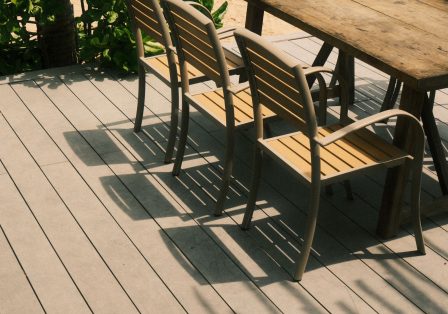
Quick Summary Composite decking outlasts pressure-treated wood by 10 to 15 years in Greater New Orleans because IECC Climate Zone 2A's sustained humidity, summer heat, and tropical rainfall accele...
Quick Summary For most Greater New Orleans homeowners, composite decking outlasts pressure-treated pine by a decade or more in IECC Climate Zone 2A, where Formosan subterranean termites, subtropic...
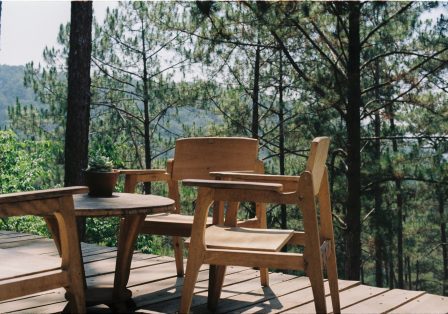
What You Need to Know Composite decking outlasts pressure-treated wood by 15 to 35 years in New Orleans' hot-humid subtropical climate, and it does so without the annual sealing, staining, or rot ...
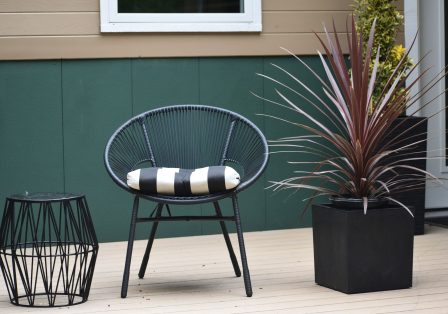
Quick Summary Big Easy Renovations helps homeowners across Orleans Parish, Jefferson Parish, and St. Tammany Parish choose between composite and wood decking for backyard builds in New Orleans. Com...
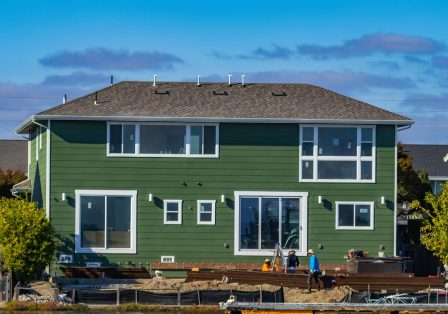
Quick Summary Fiber cement siding, commonly called Hardie board after the James Hardie brand, is the strongest performer for New Orleans homes because it resists hurricane-force winds above 150 mp...
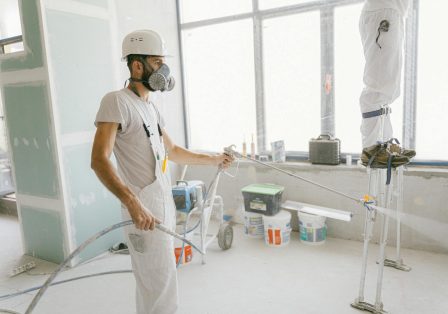
Quick Summary Cellulose insulation absorbs moisture from New Orleans's ambient humidity, compresses over time, and loses the R-value it was installed to deliver, making it a poor long-term choice ...
 By BigEZRenovations
  0 Comment
  Jul 7, 2026
  By
BigEZRenovations
By
BigEZRenovations  0 Comments