

Opening Hours Mon - Fri: 8:00 AM - 3:00 PMSat - Sun: Closed
New Orleans’ Trusted Renovation Experts — Transform Your
Home with Confidence- Get Your Free Estimate
Opening Hours Mon - Fri: 8:00 AM - 3:00 PMSat - Sun: Closed

Talk to an Expert504-294-8616
Opening Hours Mon - Fri: 8:00 AM - 3:00 PMSat - Sun: Closed

What You Need to Know
In Louisiana’s IECC Climate Zone 2A hot-humid environment, composite decking outlasts pressure-treated pine by two to three times, averaging 25 to 30 years of service life compared to wood’s 10 to 15 years before rot, warping, or termite damage becomes a structural concern. New Orleans holds the worst Formosan termite infestation in the continental United States, and Formosan colonies can cause severe structural damage to wood in as little as three to six months. Big Easy Renovations, licensed by the Louisiana State Licensing Board for Contractors (LSLBC) under Residential License #890459, installs outdoor decks across Greater New Orleans and surrounding parishes using materials matched to the local climate. Both composite and wood deck projects require a building permit from the Orleans Parish Safety and Permits office or Jefferson Parish Inspection and Code Enforcement before construction begins.
Last Updated: June 2026
Composite decking outlasts pressure-treated wood by two to three times in Greater New Orleans, where IECC Climate Zone 2A hot-humid conditions, 62 inches of annual rainfall, and the nation’s worst Formosan termite infestation combine to make material selection a long-term structural and financial decision. Big Easy Renovations, licensed by the Louisiana State Licensing Board for Contractors (LSLBC) under Residential License #890459, builds outdoor decks and elevated patio structures across Orleans, Jefferson, St. Tammany, and St. John the Baptist parishes. For most homeowners in the region, composite wins on lifespan, total maintenance cost, and resistance to Formosan termite damage.
Big Easy Renovations holds both Residential Contractor License #890459 and Commercial Contractor License #3667 from the LSLBC, covering projects from the Garden District and Bywater to Covington, Slidell, and LaPlace. The full material decision also depends on whether the deck sits over a pier-and-beam foundation common in older New Orleans construction, where moisture beneath the structure adds to the decay risk for any wood product.
Composite decking outlasts pressure-treated pine by two to three times in Greater New Orleans. Composite boards average 25 to 30 years of service life, with manufacturer warranties from major brands running 25 to 50 years. Pressure-treated pine typically lasts 10 to 15 years in Climate Zone 2A before rot, warping, or splitting requires structural board replacement.
| Factor | Pressure-Treated Pine | Composite Decking |
|---|---|---|
| Typical Lifespan | 10–15 years in humid climate | 25–30 years (up to 50 with premium brands) |
| Rot Resistance | Chemical treatment slows rot; not eliminated in sustained humidity | No organic content; does not rot |
| Formosan Termite Risk | High; Formosan colonies breach chemically treated wood once moisture softens fibers | Low; no cellulose to attract or feed termites |
| Mold and Mildew | High risk in Zone 2A conditions | Capped composite resists mold without sealing |
| Annual Maintenance | Cleaning, sealing, and staining required each year | Soap and water only; no staining or sealing |
| Manufacturer Warranty | None standard on decking boards | 25–50 years on most major brands |
Wood decking in Greater New Orleans requires a genuine annual maintenance commitment. Sealing, staining, and board replacement every eight to twelve years become predictable costs on top of the initial installation price. For properties in Lakeview, Gentilly, or the Lower Ninth Ward where ground moisture stays elevated year-round, composite’s resistance to water absorption makes the strongest case for itself.
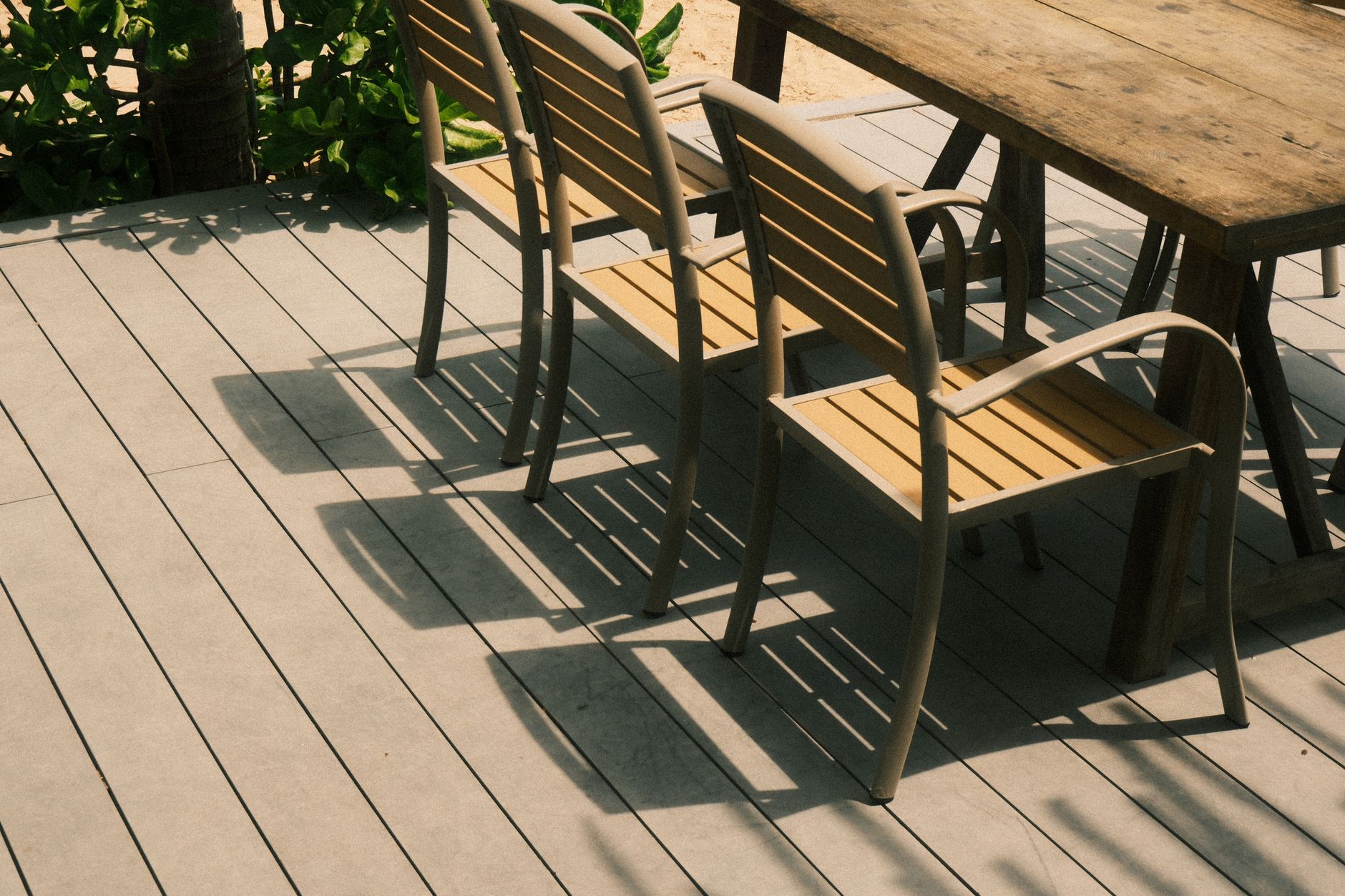
New Orleans holds the worst Formosan termite infestation in the continental United States. A Formosan subterranean termite colony can cause severe structural damage in three to six months, consuming wood roughly 10 times faster than native subterranean species. For any wood deck in the Greater New Orleans metro, Formosan termite exposure is a baseline condition and not a hypothetical risk.
The LSU AgCenter and the City of New Orleans Mosquito, Termite and Rodent Control Board document that Formosan termites cause an estimated $300 million in annual losses in New Orleans alone and $500 million annually across Louisiana. These termites swarm each spring on warm, humid evenings from late April through May, concentrating near street lights across all five parishes Big Easy Renovations serves. Pressure-treated lumber slows termite attack through chemical treatment, but Formosan colonies are aggressive enough to breach treatment zones once sustained moisture softens wood fibers over time.
Composite decking contains no cellulose, the organic material Formosan termites consume. The substructure framing beneath any deck still requires termite protection regardless of the surface material, but composite boards eliminate the deck surface itself as a food source and reduce the total wood mass a colony can access. In the Marigny, Treme, Uptown, Mid-City, and Metairie neighborhoods where pest control services consistently document Formosan activity, this distinction reduces exposure considerably.

Composite decking costs more upfront than pressure-treated wood, but the total cost of ownership over 10 years typically favors composite. In the Greater New Orleans market, installed deck costs run approximately $25 to $43 per square foot for pressure-treated wood and $40 to $70 per square foot for composite, both figures including materials, labor, substructure framing, and a basic railing run.
Big Easy Renovations handles the permitting process through the Orleans Parish Safety and Permits office and Jefferson Parish Inspection and Code Enforcement as part of every deck project across both parishes. Work in Jefferson Parish on projects with construction value above $7,500 requires a licensed contractor holding a Jefferson Parish Home Builder’s license, which the Big Easy Renovations team carries.
Orleans Parish and Jefferson Parish both require a building permit before deck construction begins, regardless of material choice. The requirement covers new construction, structural additions, and full deck replacements. Projects without a permit face code compliance problems at property sale and potential removal orders from the parish building department.
In Orleans Parish, the Safety and Permits office handles residential deck permits. A site plan showing the deck footprint relative to property lines is required, along with structural drawings for any elevated structure. For properties in Historic District Landmarks Commission (HDLC)-regulated neighborhoods, including the Marigny, Treme, Bywater, Garden District, and Irish Channel, the HDLC may require a Certificate of Appropriateness (COA) before exterior construction on any elevation visible from a public right-of-way. The HDLC reviews exterior additions across 14-plus historic districts in Orleans Parish, and outdoor structures fall within that review scope. Homeowners adding ironwork, fencing, or gates alongside a deck face the same COA process that applies to custom gate and ironwork installation in those same neighborhoods.
In Jefferson Parish, the Inspection and Code Enforcement office in Metairie (1221 Elmwood Park Blvd.) and Marrero (1855 Ames Blvd.) issues permits for Metairie, Kenner, Gretna, and surrounding communities. On the North Shore, St. Tammany Parish Permits and Inspections handles projects in Mandeville, Covington, Madisonville, and Slidell.
Ipe wood is the one natural decking material that consistently rivals composite for lifespan in Greater New Orleans, but it costs significantly more to install and requires periodic maintenance that composite does not. For most homeowners in Orleans and Jefferson parishes, capped composite delivers better long-term value unless natural wood aesthetics are a high priority.
Ipe, a South American tropical hardwood also called Brazilian walnut, has natural density that makes it resistant to rot, mold, and insect damage. The U.S. Naval Research Laboratory found that Ipe resisted termite attack for all 15 years of a ground-contact durability study, longer than any other wood species tested. Properly maintained Ipe decking can last 40 to 75 years in Greater New Orleans.
Ipe typically runs $60 to $90 per square foot installed in the New Orleans market, significantly more than pressure-treated pine or mid-grade composite. It requires penetrating oil applied every two to three years to maintain its appearance; without it, the wood weathers to a silver-gray patina from UV exposure. For homeowners who prioritize natural wood aesthetics and commit to that maintenance schedule, Ipe is a legitimate long-term option in this climate. For most, capped composite from brands like Trex or TimberTech provides equivalent durability with simpler maintenance and a lower installed cost.
Homeowners combining an outdoor deck with a kitchen renovation to connect indoor and outdoor entertaining often find value in coordinating the kitchen remodel with the outdoor build under one licensed contractor, since permitting timelines for both projects frequently overlap. Homeowners planning an outdoor cooking space alongside the deck should also compare surface heat and clearance requirements early, since the team managing outdoor kitchen construction can incorporate those considerations into the initial deck design.
What is the best decking material for New Orleans’ humid climate?
Composite decking performs best in New Orleans’ IECC Climate Zone 2A conditions. It resists rot, mold, and moisture absorption, and contains no cellulose that Formosan termites can consume. Pressure-treated pine costs less upfront but requires annual maintenance and carries higher termite and rot risk in this climate than composite alternatives.
How long does a wood deck last in Louisiana?
Pressure-treated pine decking typically lasts 10 to 15 years in Greater New Orleans before significant rot, warping, or termite damage requires board replacement. In lower-lying areas with higher ground moisture, including parts of Lakeview, Gentilly, and the Lower Ninth Ward, the lifespan may be shorter without consistent annual maintenance and sealing.
Do you need a permit to build a deck in New Orleans?
Yes. The Orleans Parish Safety and Permits office requires a building permit for all new deck construction and structural deck additions in New Orleans. Jefferson Parish Inspection and Code Enforcement issues permits for Metairie, Kenner, Gretna, and surrounding communities. Work should not begin before the permit is issued and inspection appointments are scheduled.
Does composite decking get too hot to walk on during Louisiana summers?
Standard composite decking can reach surface temperatures of 150 degrees Fahrenheit or higher in direct Louisiana sun, which is uncomfortably hot to walk on barefoot. Capped composite products with lighter colors and heat-reflective technology from brands like Trex and TimberTech run significantly cooler, and adding a pergola or shade structure reduces peak surface temperature during afternoon hours.
Is composite decking worth the extra upfront cost in New Orleans?
For most Greater New Orleans homeowners, yes. Over a 10-year window, composite decking’s higher upfront cost typically aligns with wood’s total cost once annual sealing, staining, and board replacement expenses are factored in. The longer service life means the composite deck continues performing for another 15 to 20 years at the point where a wood deck would typically need full replacement.
Ready to plan your outdoor deck project? Call Big Easy Renovations at (504) 294-8616 or schedule a project consultation to discuss material options, permit requirements, and build timelines across New Orleans, Metairie, Kenner, and the surrounding parishes. The team covers composite and wood deck installation alongside outdoor kitchen construction and interior renovation, all under one licensed contractor, for the full project scope.

Ever wondered which room in your home could give you the best return on investment when renovated? You’re not alone. Home renovation is a consistent priority for New Orleans homeowners, many...
Quick Summary Cellulose insulation absorbs moisture from New Orleans's ambient humidity, compresses over time, and loses the R-value it was installed to deliver, making it a poor long-term choice ...
Starting a home renovation is like opening a door to a world of possibilities, where your living space can be transformed into something truly remarkable. At Big EZ Renovations, we appreciate the i...
Quick Summary Fiber cement siding, commonly called Hardie board after the James Hardie brand, is the strongest performer for New Orleans homes because it resists hurricane-force winds above 150 mp...
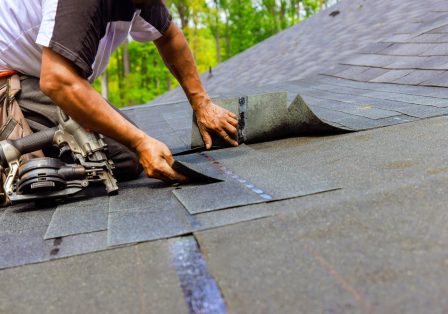
Roof repair in New Orleans typically costs $150 to $1,500 for minor repairs like patching leaks or replacing a few shingles. More extensive repairs involving water damage or structural issues range...
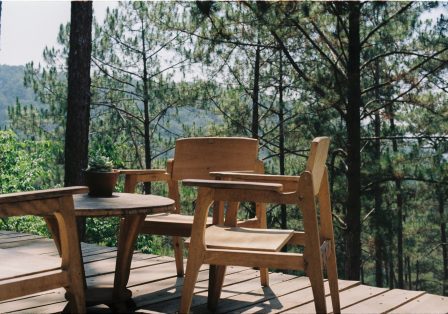
What You Need to Know Composite decking outlasts pressure-treated wood by 15 to 35 years in New Orleans' hot-humid subtropical climate, and it does so without the annual sealing, staining, or rot ...
 By BigEZRenovations
  0 Comment
  Jun 23, 2026
  By
BigEZRenovations
By
BigEZRenovations  0 Comments