

Opening Hours Mon - Fri: 8:00 AM - 3:00 PMSat - Sun: Closed
New Orleans’ Trusted Renovation Experts — Transform Your
Home with Confidence- Get Your Free Estimate
Opening Hours Mon - Fri: 8:00 AM - 3:00 PMSat - Sun: Closed

Talk to an Expert504-294-8616
Opening Hours Mon - Fri: 8:00 AM - 3:00 PMSat - Sun: Closed

Quick Summary
Planning an outdoor kitchen in New Orleans means designing for IECC Climate Zone 2A, a hot-humid environment that receives 61 inches of rain each year and exposes every outdoor surface to Gulf Coast salt air that corrodes standard materials faster than most U.S. climates allow. Big Easy Renovations builds custom outdoor kitchens across Greater New Orleans, Jefferson Parish, and St. Tammany Parish under Residential Contractor License #890459 issued by the Louisiana State Licensing Board for Contractors (LSLBC). The strongest builds in this region combine Grade 316 marine-grade stainless steel appliances, weatherproof concrete or stone frames, and a covered structure rated for hurricane-season rainfall and sustained summer heat. Homeowners whose properties fall inside HDLC-regulated historic districts, including the Marigny, Bywater, Treme, and Irish Channel, must secure a Certificate of Appropriateness from the Historic District Landmarks Commission before any exterior construction can begin.
Last Updated: May 2026
Building an outdoor kitchen in New Orleans requires more than picking a grill and pouring a concrete slab. IECC Climate Zone 2A, the hot-humid classification governing Greater New Orleans, delivers sustained summer heat, 61 annual inches of rainfall, and salt-laden air from Lake Pontchartrain and the Gulf Coast. Those conditions degrade unprotected materials faster than in most U.S. markets. Big Easy Renovations brings licensed construction expertise to outdoor kitchen builds across Orleans, Jefferson, and St. Tammany parishes, with material selections, cover requirements, and permitting steps calibrated specifically for south Louisiana.
Big Easy Renovations also coordinates permitting across Orleans and Jefferson Parish jurisdictions under Residential License #890459 and Commercial Contractor License #3667, both issued by the Louisiana State Licensing Board for Contractors. Gas line work, electrical circuits, covered structures, and Historic District Landmarks Commission review all operate on separate permit tracks in New Orleans. A contractor licensed across all these disciplines and familiar with both parish permit offices removes the coordination problems that come with managing multiple subcontractors across a single outdoor kitchen project.
The payoff for building it correctly is significant. New Orleans weather allows outdoor cooking from February through November with minimal interruption. The city’s backyard culture makes that space genuinely useful: the crawfish boil, the seafood fry, and the neighborhood gathering are not occasional events here. An outdoor kitchen designed around high-BTU burners, a proper drainage channel for boil runoff, and covered prep space serves New Orleans homeowners in ways that a generic grilling island from a northern-market contractor cannot match.
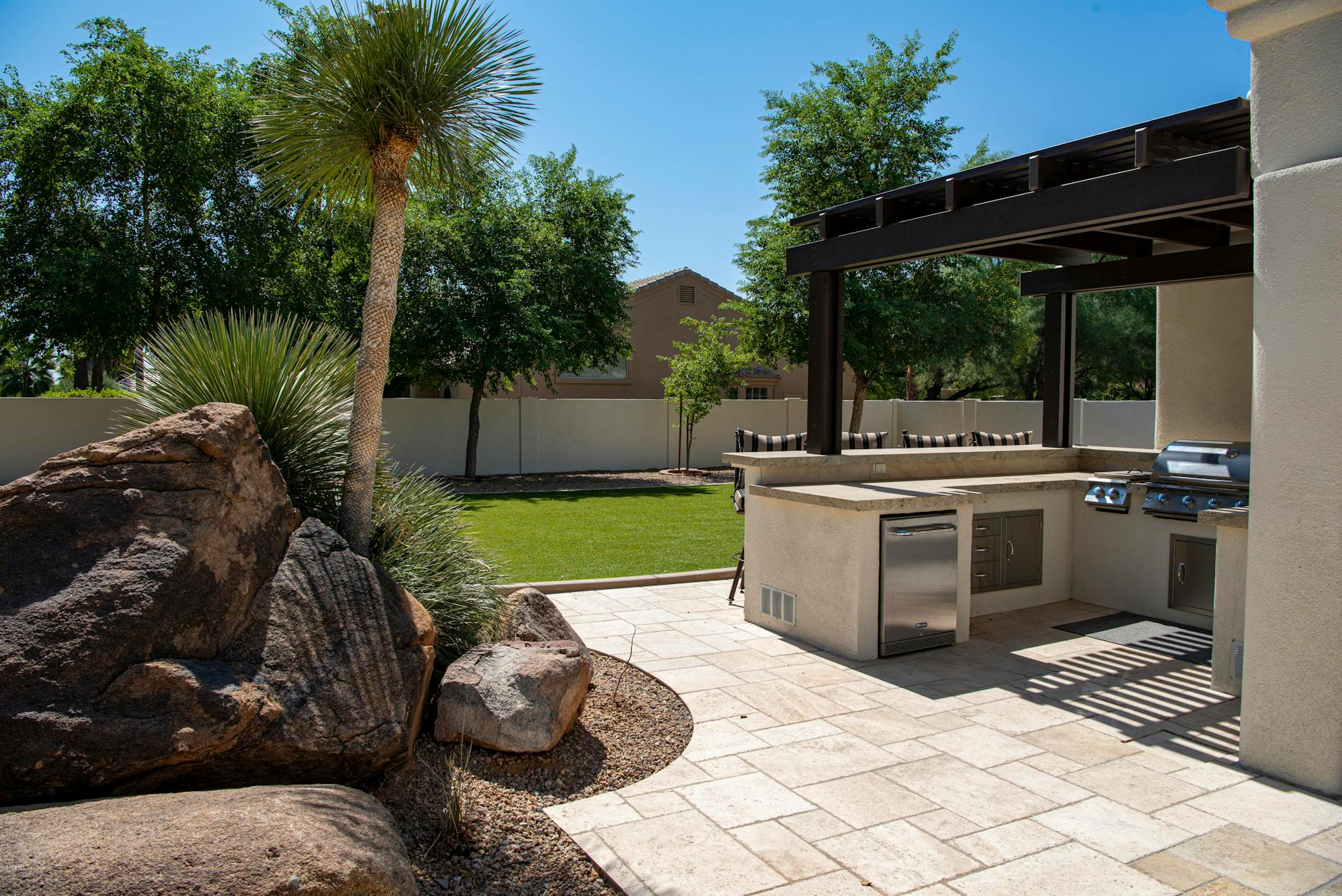
Grade 316 marine-grade stainless steel, concrete masonry, and natural stone are the correct material choices for outdoor kitchen construction in New Orleans. Grade 316 contains molybdenum that resists chloride-induced corrosion from Gulf Coast salt air. Grade 304, the more common lower-cost alternative, shows surface pitting and rust within a few seasons at coastal proximity. Wood framing and standard cement board both absorb moisture and fail prematurely in Zone 2A conditions.
For cabinet frames and enclosures, concrete block or powder-coated steel outperforms wood and vinyl in south Louisiana. Concrete block does not rot, does not swell with humidity, and anchors solidly to a poured slab. Countertop materials that hold up well include porcelain tile, sealed granite, and properly sealed concrete. Unsealed concrete counters wick moisture and develop hairline cracks within two to three outdoor seasons in this climate.
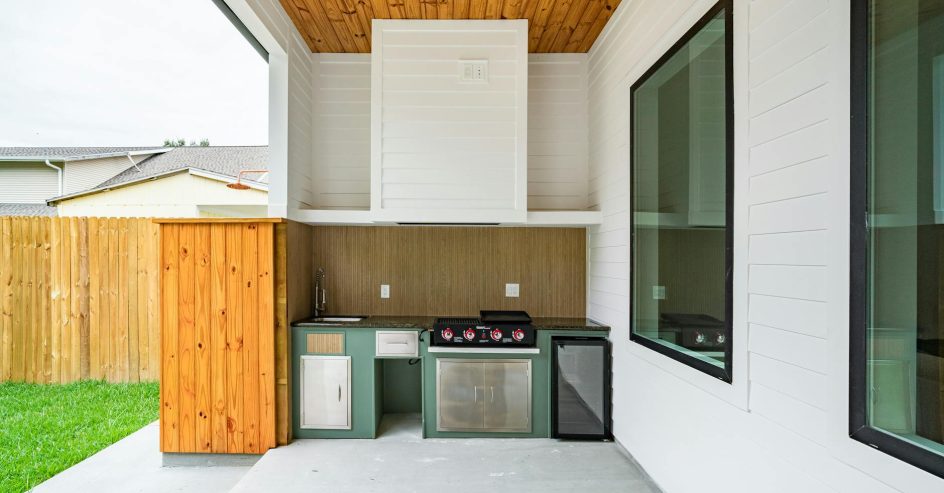
Appliances must carry a manufacturer rating for exterior use. Indoor units are not engineered for sustained humidity, UV exposure, or the thermal cycling that New Orleans conditions produce year-round. For Louisiana cooking specifically, an outdoor kitchen with a seafood boil station requires a high-BTU burner rated for outdoor propane or natural gas, a drainage channel sloped at 2% away from the structure per International Residential Code standards, and storage built to handle regular contact with water and seafood brine.
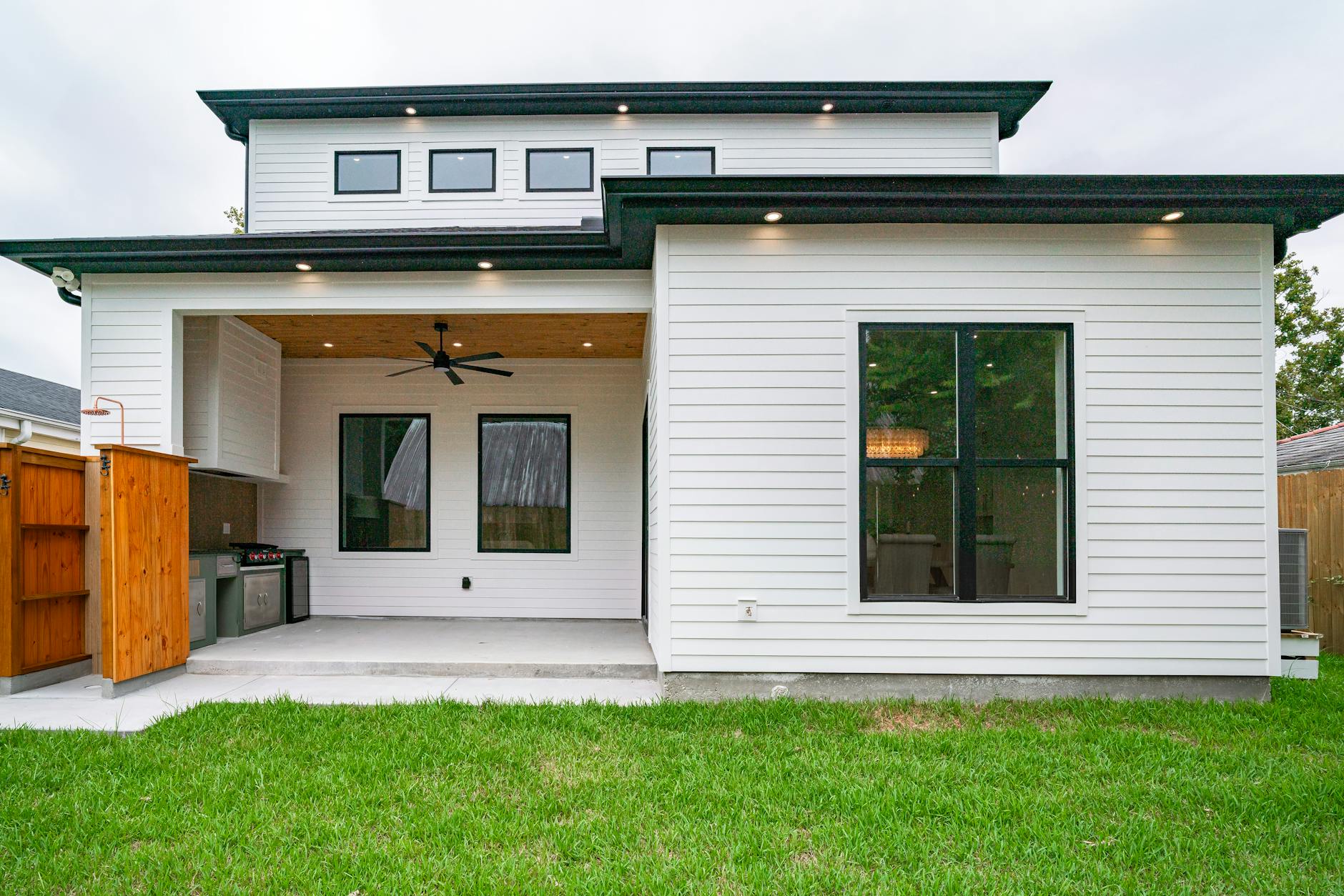
An insulated aluminum patio cover with an integrated gutter system outperforms every other option for New Orleans outdoor kitchens. Insulated aluminum panels block heat transfer through the roof plane, deflect UV load, and handle the region’s heavy rainfall without warping, rotting, or requiring repainting. Open pergolas and wood-framed structures absorb moisture and degrade faster in Zone 2A than most homeowners anticipate when they select them for their lower upfront cost.
Homeowners who plan to add a connected deck or patio that extends the outdoor entertaining footprint should design the cover to span the full area from the start. Retrofitting a cover extension after the kitchen is built typically costs more than building the full covered span in a single construction phase.
Most outdoor kitchen builds in Greater New Orleans require at least two permits and often three. Gas line extensions require a permit and licensed inspection through the applicable parish jurisdiction. Electrical connections for outdoor outlets or circuits require a separate permit. A covered or roofed structure attached to the home triggers a building permit through the Orleans Parish Building Department or Jefferson Parish Inspection and Code Enforcement, depending on where the property is located.
Homeowners in the Marigny, Bywater, Treme, Irish Channel, Algiers Point, and other full-control districts governed by the Historic District Landmarks Commission (HDLC) must complete the commission’s design review before construction begins. The HDLC evaluates outdoor structures for compatibility with the historic character of the block, not only for structural compliance. Homeowners can start the Certificate of Appropriateness process at nola.gov/hdlc.
The three most expensive mistakes in New Orleans outdoor kitchen builds are specifying Grade 304 instead of Grade 316 stainless steel, omitting a proper drainage slope on the slab, and skipping a solid cover. Each of these failures accelerates under Zone 2A conditions, and together they can reduce a build’s functional lifespan from twenty years to five.
Grade 304 steel corrodes in coastal environments because salt air introduces chloride ions that penetrate its passive oxide layer and begin oxidizing the base metal. Grade 316 contains molybdenum specifically to resist this reaction. In Gulf Coast Louisiana, that difference can add a decade or more to appliance and frame lifespan. The two grades look identical at installation, but the difference becomes visible by year three in salt-air proximity.
Drainage is equally consequential. New Orleans receives 61 inches of rain per year, and a slab without a proper drainage slope accumulates standing water around cabinet bases and appliance legs. The International Residential Code requires impervious surfaces within 10 feet of a foundation to slope at 2% away from the structure, and any integrated drains must connect to a system that moves water off the property rather than toward the foundation.
Skipping a solid cover compounds both problems by exposing every surface to direct rainfall. Uncovered outdoor kitchens in New Orleans degrade two to three times faster than covered builds because of rain contact at appliance seams, cabinet edges, and countertop joints. Homeowners who are also planning an interior kitchen renovation at the same time gain a real efficiency advantage by coordinating both scopes with a single contractor, which allows gas line routing and electrical circuit planning to happen once rather than twice.
Outdoor kitchen costs in Greater New Orleans range from approximately $7,000 for a basic grilling island on an existing concrete slab to $35,000 or more for a fully covered, multi-appliance outdoor cooking and entertaining space. Most mid-range builds with a grill, undercounter refrigerator, prep sink, and attached covered structure land between $15,000 and $25,000 before permit fees.
| Build Type | Estimated Cost Range |
|---|---|
| Basic grilling island on existing concrete slab | $7,000 to $12,000 |
| Mid-range covered build with grill, refrigerator, and sink | $15,000 to $25,000 |
| Full outdoor kitchen with Louisiana boil station and bar | $25,000 to $40,000 |
| Luxury build with full appliance suite and premium cover | $40,000 and up |
Costs in Greater New Orleans typically run toward the upper end of national estimates because of the added expense of Zone 2A-rated materials, multi-discipline permit fees, and HDLC review for properties in historic districts. If the project includes updates to the exterior wall facing the outdoor kitchen, selecting siding materials rated for New Orleans hurricane exposure keeps the full exterior consistent in weather resistance.
Please note: The prices in this article are estimates only, shared to help you plan. Your actual cost depends on your property, the materials and the size of the job. For pricing on your project, call Big EZ Renovations for a quote.
Do I need a permit for an outdoor kitchen in New Orleans?
Yes. Gas line extensions require a permit and inspection through the Orleans Parish or Jefferson Parish jurisdiction. Electrical connections for outdoor outlets or circuits require a separate electrical permit. Any covered or roofed structure attached to the home requires a building permit. Historic district properties must also obtain a Certificate of Appropriateness from the Historic District Landmarks Commission before any permit is submitted.
What materials hold up best in Louisiana humidity for an outdoor kitchen?
Grade 316 marine-grade stainless steel is the correct choice for appliances and frames in Louisiana’s coastal conditions. Concrete masonry frames, sealed granite or porcelain tile countertops, and manufacturer-rated outdoor appliances perform reliably in IECC Climate Zone 2A. Avoid wood framing, standard cement board, Grade 304 stainless steel, and any countertop material that is not sealed on an annual basis.
How much does an outdoor kitchen cost in New Orleans?
A basic New Orleans outdoor kitchen starts around $7,000 for a grill island on an existing slab. A covered mid-range build with a grill, refrigerator, and sink typically runs $15,000 to $25,000. Full builds with a Louisiana seafood boil station and premium covered structure range from $25,000 to $40,000 or more depending on materials, appliances, and whether HDLC review applies to the property.
Do I need HDLC approval for an outdoor kitchen in a historic district?
Yes. Homeowners in any Historic District Landmarks Commission full-control district, including the Marigny, Bywater, Treme, Irish Channel, and Algiers Point, must obtain a Certificate of Appropriateness before exterior construction begins. The HDLC reviews the design for compatibility with the neighborhood’s historic character, and that review must be completed before the building permit application is submitted to the Orleans Parish Building Department.
What is the best cover type for a New Orleans outdoor kitchen?
An insulated aluminum patio cover with an integrated gutter system is the strongest performer for Greater New Orleans conditions. It blocks radiant heat transfer through the roof plane, handles the region’s 61 inches of annual rainfall without warping or rotting, and requires less ongoing maintenance than wood or fabric alternatives. A ceiling fan installed beneath the cover extends usable cooking hours through the June-to-September peak heat period.
What mistakes shorten an outdoor kitchen’s life in Louisiana?
The most common failures are specifying Grade 304 instead of Grade 316 stainless steel, omitting a 2% drainage slope on the slab, building without a solid cover, and installing indoor-rated appliances outdoors. Each failure accelerates in New Orleans because of IECC Climate Zone 2A humidity, 61 inches of annual rainfall, and the salt air that reaches most of Orleans and Jefferson parishes from the Gulf Coast.
Ready to plan your outdoor kitchen? Call Big Easy Renovations at (504) 294-8616 to schedule a project consultation. The team designs and builds outdoor kitchens across New Orleans, Metairie, Kenner, and the surrounding parishes, manages permitting for both Orleans and Jefferson Parish projects, and selects materials matched to Zone 2A conditions rather than generic national specifications. Homeowners who want to send project details in advance can reach the project team online to get the conversation started.
Quick Summary: A kitchen remodel in a New Orleans shotgun house costs $9,900 to $40,500 and typically takes 6 to 12 weeks. Pier-and-beam foundations, aging plumbing, and knob-and-tube wiring add co...
Quick Summary A New Orleans roof with isolated damage on a single section and fewer than 15 years of service can usually be repaired rather than replaced. Big Easy Renovations, licensed by the Lou...
What You Need to Know Finding termite damage during a renovation in New Orleans is more common than most homeowners expect, because Formosan subterranean termites can hollow out floor joists, wall...
A FORTIFIED roof in Louisiana costs $4.40-$6.90 per square foot, or roughly $8,800-$13,800 for a 2,000 sq ft home, only 10-15% more than a standard replacement. The Louisiana Fortify Homes Program ...

Quick Summary Cellulose insulation absorbs moisture from New Orleans's ambient humidity, compresses over time, and loses the R-value it was installed to deliver, making it a poor long-term choice ...
Quick Summary Bathroom renovation in New Orleans, Louisiana requires a permit from the Orleans Parish Department of Safety and Permits before any plumbing, electrical, or structural work begins. M...
 By BigEZRenovations
  0 Comment
  May 19, 2026
  By
BigEZRenovations
By
BigEZRenovations  0 Comments