

Opening Hours Mon - Fri: 8:00 AM - 3:00 PMSat - Sun: Closed
New Orleans’ Trusted Renovation Experts — Transform Your
Home with Confidence- Get Your Free Estimate
Opening Hours Mon - Fri: 8:00 AM - 3:00 PMSat - Sun: Closed

Talk to an Expert504-294-8616
Opening Hours Mon - Fri: 8:00 AM - 3:00 PMSat - Sun: Closed

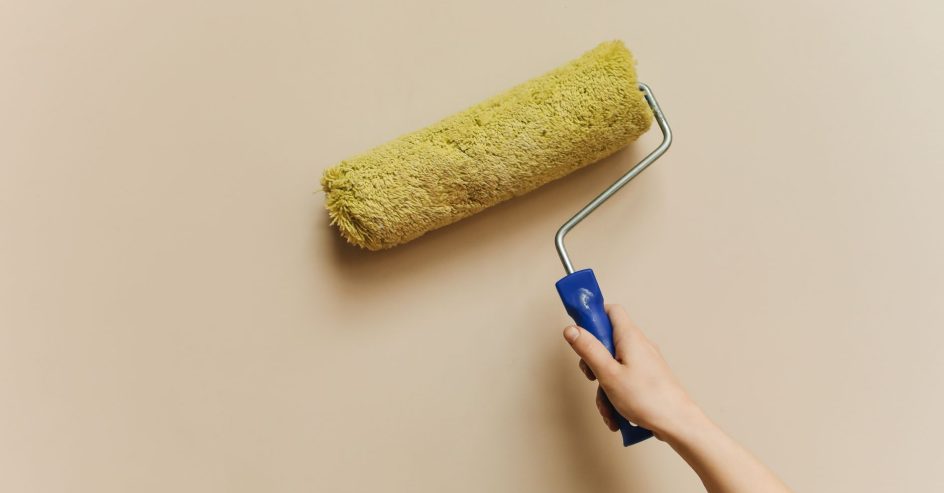
New Orleans homes lose paint adhesion fastest on walls that trap moisture behind the coating, and the culprit is almost always vapor rather than a bad paint job. Big EZ Renovations, licensed by the Louisiana State Licensing Board for Contractors under Residential License #890459, sees this pattern across shotgun houses, Creole cottages, and raised camelbacks throughout Orleans Parish. Interior paint here often fails within two to three years when a wall gets primed and coated without addressing the moisture moving through it, not because of a defective paint job.
The reason comes down to IECC Climate Zone 2A, the hot and humid building code zone covering Greater New Orleans, which reverses how vapor barriers and paint films are supposed to behave inside a wall assembly. In colder states, vapor barriers sit toward the exterior side of a wall because indoor heat pushes moisture outward during winter. Zone 2A flips that logic, since humid outside air pushes moisture inward through brick, stucco, and wood siding for most of the year, and a paint film that seals in that vapor is what actually causes bubbling and peeling. Homeowners researching renovation and roofing options across the New Orleans metro often assume a paint failure is really a moisture problem in disguise, and in this climate that assumption is usually correct.
Professional prep work matters more than the paint brand chosen for the topcoat. Big EZ Renovations tests wall moisture content before opening a single can on any interior painting project in New Orleans, because painting over damp plaster or drywall locks the failure into the wall regardless of paint quality. A moisture reading above 15 percent in plaster or gypsum board means the surface needs additional drying time, ventilation, or a moisture-blocking primer before any topcoat goes on.
Louisiana’s building envelope problems rarely stay isolated to one surface. A home where attic insulation traps humidity in the ceiling cavity, as covered in Big EZ Renovations’ breakdown of why cellulose insulation underperforms in Louisiana’s humidity, often shows the same peeling pattern on ceiling paint that a poorly ventilated bathroom shows on its walls.
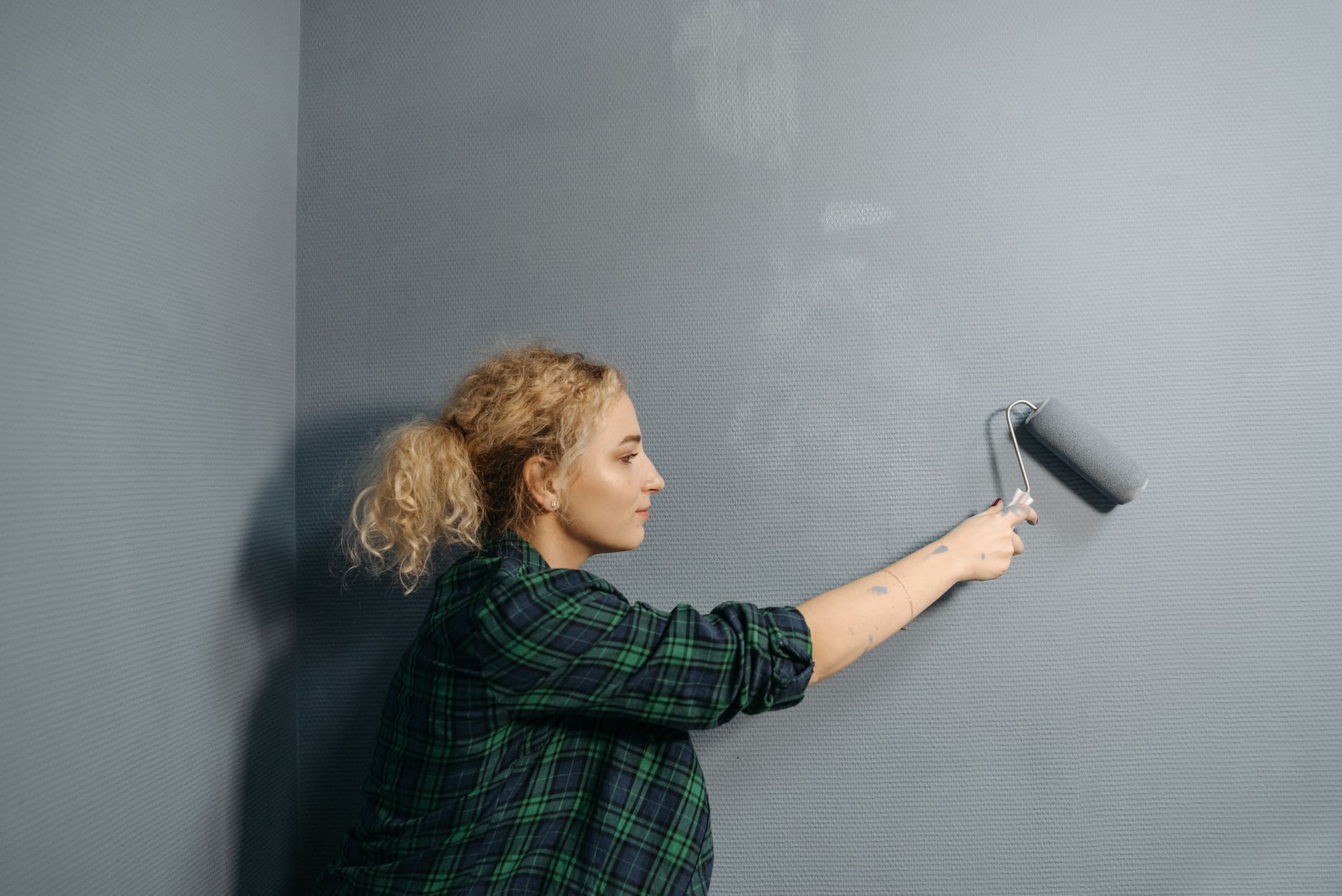
Interior paint peels fastest in New Orleans when moisture trapped behind the paint film breaks the bond between the coating and the wall surface, and Gulf Coast humidity supplies that moisture year round. Homes without proper ventilation, vapor-permeable primers, or fully cured plaster see adhesion failure within two to three years instead of the eight to ten years standard latex paint should last.
New Orleans humidity behaves differently from the moisture problems homeowners deal with in northern climates because IECC Climate Zone 2A pushes vapor inward through exterior walls for most of the year instead of outward. Average relative humidity in Greater New Orleans stays above 70 percent through much of the summer, and that moisture load pushes through brick, stucco, and lap siding into interior wall cavities long after a rainstorm has passed. The same humidity dynamics that push exterior siding choices toward fiber cement over vinyl in New Orleans also determine which interior paint films can safely seal a wall without trapping moisture inside it.
Homes built before modern house wrap and vapor-permeable membranes, common throughout Uptown, the Garden District, and Mid-City, relied on lime plaster or wood lath to manage that moisture naturally. Sealing those walls with a non-breathable acrylic paint film traps moisture that lime plaster was designed to release, which is why century-old homes painted with modern latex often peel faster than the same homes painted with breathable lime wash decades earlier.
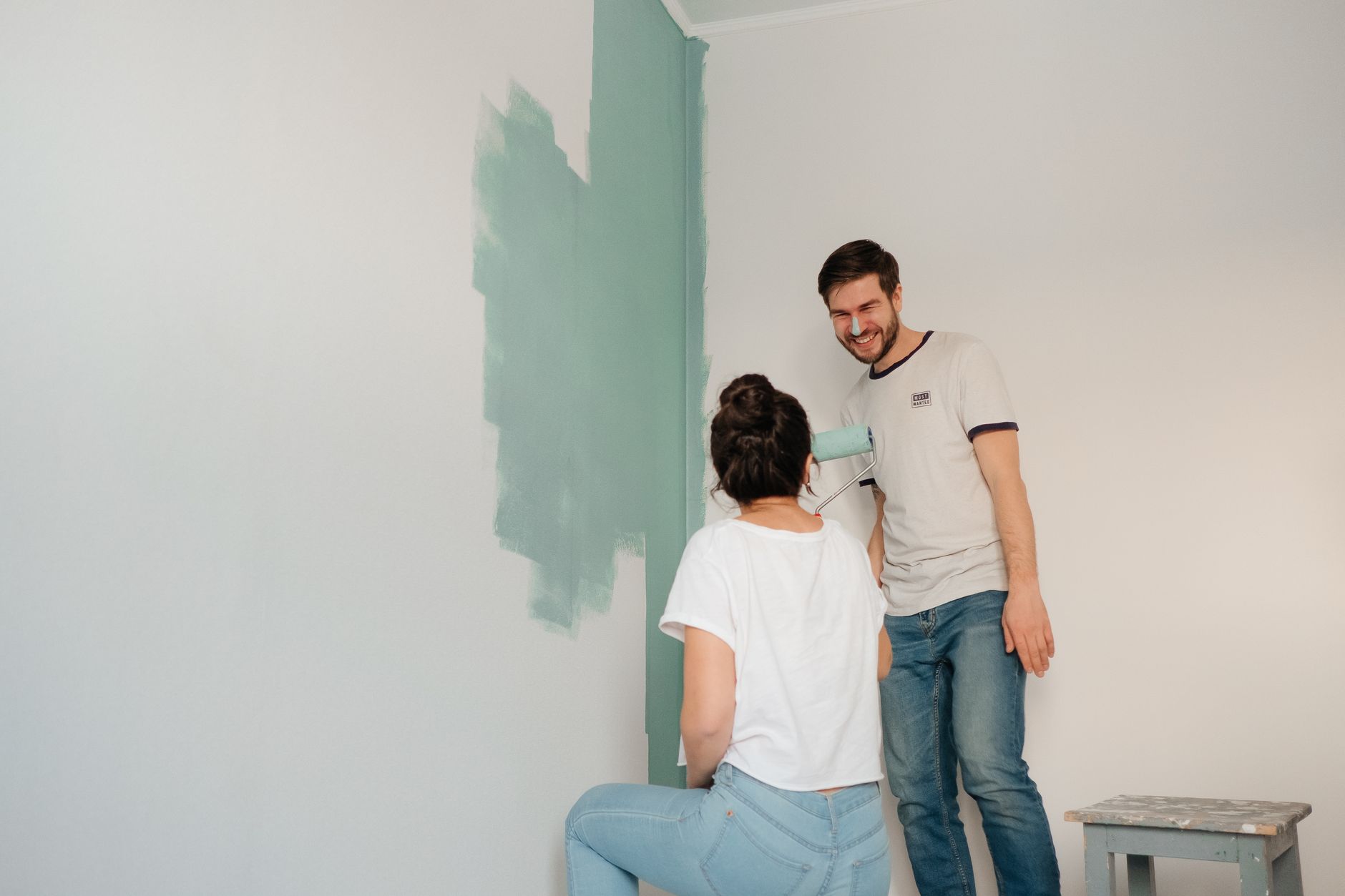
Pier-and-beam foundations common in New Orleans homes built before 1960 leave a ventilated crawl space beneath the structure, and that crawl space humidity works its way up through subfloors into interior walls when vapor barriers are missing or damaged. Add settling from soft river soil, typical throughout Orleans Parish, and plaster walls develop hairline cracks that let moisture behind the paint film even faster than an intact wall would.
A wall in this condition needs plaster repair and a skim coat before any primer goes on, not just a quick caulk and paint pass. Big EZ Renovations handles this the same way its crew approaches plaster repair during shotgun house kitchen renovations, patching and skim coating cracked sections before priming so the new paint film sits on a stable, uniform surface instead of a patchwork of old plaster and new compound.
Homes built before 1978 in New Orleans likely carry at least one layer of lead-based paint beneath the current finish, since lead paint remained standard for residential use until the federal government banned it that year. The EPA’s Renovation, Repair, and Painting Rule requires certified contractors to use lead-safe work practices whenever a paid renovation disturbs more than six square feet of painted surface inside a pre-1978 home, and the Louisiana Department of Environmental Quality enforces additional state-level lead hazard rules on top of that federal standard.
Sanding or scraping old paint without containment can spread lead dust through an entire house in an afternoon. Any contractor prepping a pre-1978 home should test the paint layer first and use wet sanding or chemical stripping methods that keep dust contained rather than dry sanding through decades of old paint.
Proper wall prep in New Orleans follows a sequence built around moisture control, not just sanding and taping. Skipping any of these steps is the most common reason a fresh paint job fails within a year in this climate.
Paint sheen affects humidity resistance as much as the primer underneath it, since higher sheen finishes resist moisture penetration and wipe clean more easily than flat paint.
| Room Type | Recommended Finish | Why It Holds Up |
|---|---|---|
| Bathrooms and laundry rooms | Semi-gloss or high-gloss | Sheds moisture and resists mildew growth in constant humidity |
| Kitchens | Satin or semi-gloss | Withstands grease, steam, and frequent wiping |
| Bedrooms and living rooms | Eggshell or satin | Balances humidity resistance with a softer finish |
| Ceilings | Flat or matte with mildew-resistant additive | Hides imperfections while still resisting mildew common on New Orleans ceilings |
Interior painting in the New Orleans metro typically runs $300 to $800 for a single room and $3,000 to $7,000 for a full three-bedroom home interior, with cabinet painting adding $1,500 to $4,000 depending on the number of doors and drawers involved. Homes needing plaster repair, skim coating, or lead-safe containment cost more than a straightforward repaint because the prep work takes longer than the painting itself.
Bathrooms carry the highest paint failure rate in Louisiana homes, which is one reason bathroom renovation pricing in New Orleans often bundles exhaust fan upgrades with new paint and tile work rather than treating ventilation as a separate expense.
Homeowners planning a full interior refresh in Orleans, Jefferson, or St. Tammany Parish can request a project estimate through Big EZ Renovations’ contact page, where a crew member walks through moisture testing, plaster condition, and lead paint considerations before quoting a final price.
Ready to stop chasing peeling paint room by room? Call Big EZ Renovations at (504) 294-8616 to schedule a moisture assessment and interior painting estimate for a home anywhere in Greater New Orleans.
Please note: The prices in this article are estimates only, shared to help you plan. Your actual cost depends on your property, the materials and the size of the job. For pricing on your project, call Big EZ Renovations for a quote.
Why does my New Orleans home need repainting more often than homes in other states?
New Orleans sits in IECC Climate Zone 2A, a hot and humid zone where outside moisture pushes inward through walls most of the year. That vapor load breaks down paint adhesion faster than in drier climates, so interior paint here often needs recoating every three to five years instead of eight to ten.
Is it safe to paint over old plaster walls in a historic New Orleans home?
Old plaster can be painted safely once cracked or loose sections are repaired and skim coated to create a stable surface. Homes built before 1978 should also be tested for lead paint before any sanding or scraping begins, since disturbing lead paint without containment can spread hazardous dust through the house.
How do I know if peeling paint means I have a moisture problem?
Bubbling, cracking near ceilings and floors, or paint lifting off in sheets rather than flaking in small chips usually signals trapped moisture rather than normal wear. A pin-type moisture meter reading above 15 percent in plaster or drywall confirms the wall needs to dry out before repainting.
What paint finish resists humidity best in a New Orleans bathroom?
Semi-gloss and high-gloss finishes resist moisture penetration and wipe clean more easily than flat or eggshell paint, which is why Big EZ Renovations recommends them as the standard choice for bathrooms, laundry rooms, and other high-humidity spaces throughout Greater New Orleans homes, especially where exhaust ventilation is limited.
How much does interior painting cost in New Orleans?
A single room typically costs $300 to $800, while a full three-bedroom home interior runs $3,000 to $7,000 depending on wall condition, ceiling height, and whether plaster repair or lead-safe prep work is needed. Cabinet painting adds $1,500 to $4,000 separately from wall painting.
Do I need a permit to repaint the interior of my New Orleans home?
Interior repainting does not require a permit from the Orleans Parish Building Department in most cases, since painting counts as routine maintenance rather than structural or exterior alteration work. Permits become necessary only if the project expands into drywall replacement, electrical work, or structural repairs alongside the paint job.
Quick Summary Fiber cement siding, commonly called Hardie board after the James Hardie brand, is the strongest performer for New Orleans homes because it resists hurricane-force winds above 150 mp...
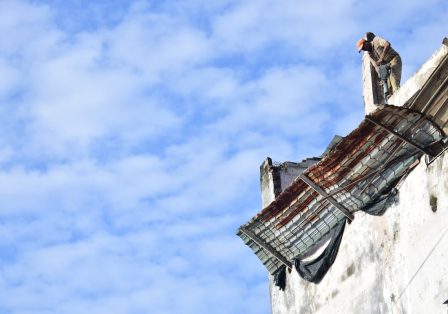
Big EZ Renovations applies professional roof coatings across Greater New Orleans, and the cost ranges from $0.50 to $7.00 per square foot installed in 2026 depending on the coating type, roof size,...
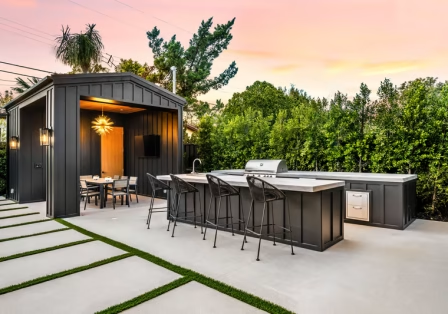
An outdoor kitchen in New Orleans costs $5,000 to $50,000 or more in 2026 depending on size, materials, appliances, and whether the project requires gas, water, and electrical connections. Big EZ R...
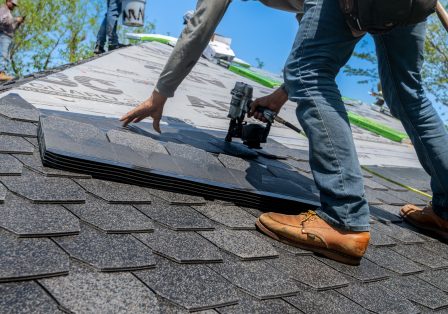
Quick Summary A New Orleans roof with isolated damage on a single section and fewer than 15 years of service can usually be repaired rather than replaced. Big Easy Renovations, licensed by the Lou...
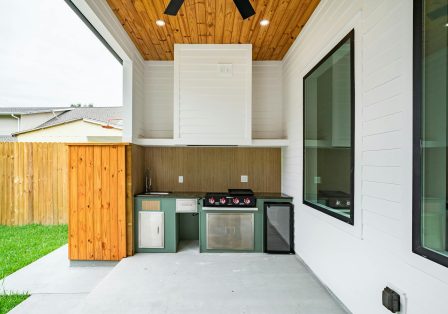
Quick Summary Planning an outdoor kitchen in New Orleans means designing for IECC Climate Zone 2A, a hot-humid environment that receives 61 inches of rain each year and exposes every outdoor surfa...
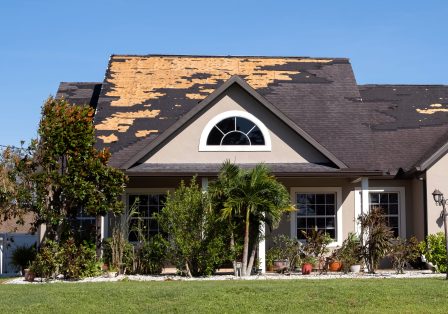
Louisiana homeowners typically have 180 days to file a roof insurance claim after hurricane damage. Insurance companies must begin adjusting your claim within 14 days (or 30 days after a catastroph...
 By BigEZRenovations
  0 Comment
  Jul 21, 2026
  By
BigEZRenovations
By
BigEZRenovations  0 Comments