

Opening Hours Mon - Fri: 8:00 AM - 3:00 PMSat - Sun: Closed
New Orleans’ Trusted Renovation Experts — Transform Your
Home with Confidence- Get Your Free Estimate
Opening Hours Mon - Fri: 8:00 AM - 3:00 PMSat - Sun: Closed

Talk to an Expert504-294-8616
Opening Hours Mon - Fri: 8:00 AM - 3:00 PMSat - Sun: Closed

Last Updated: July 2026
A kitchen remodel in a New Orleans historic home is not the same project as a kitchen remodel anywhere else. Shotgun houses, the narrow, room-by-room floor plans that define so much of New Orleans housing stock, create specific layout constraints, mechanical challenges, and permit timelines that homeowners in newer suburbs never encounter. If you’re planning a kitchen remodel in a New Orleans historic home, knowing what to expect before demolition starts can save weeks of delays and thousands of dollars in surprises.
Big Easy Renovations has remodeled kitchens in historic shotgun houses across Uptown, Mid-City, the Bywater, and beyond. This guide covers what local homeowners need to know, from permit rules to the hidden issues that routinely extend project timelines.
Please note: The prices in this article are estimates only, shared to help you plan. Your actual cost depends on your property, the materials and the size of the job. For pricing on your project, call Big EZ Renovations for a quote.
Shotgun house kitchens present a distinct set of challenges compared to kitchens in ranch homes, split-levels, or modern construction. The narrow floor plan (typically 12 to 15 feet wide), pier-and-beam foundation, and century-old mechanical systems all affect what’s possible, what’s required, and what the project will cost. Understanding these differences before you solicit bids is the single most valuable thing you can do.
The most common layout constraint is width. In a single shotgun, the kitchen may share its only exterior wall with a back porch or an added-on utility room. This limits where you can place windows for ventilation, run ductwork for a range hood, or expand the footprint without a full addition. In a double shotgun that’s been converted to a single-family home, there’s often an opportunity to open the floor plan, but that requires identifying and properly supporting any load-bearing walls before a single stud is removed.
Pier-and-beam construction, the standard in pre-1960 New Orleans homes, is actually an advantage for kitchen plumbing work. Unlike slab-on-grade homes, where rerouting drain lines means cutting concrete, a pier-and-beam house allows plumbers to access the crawlspace and reroute pipes without jackhammering. This matters when you’re moving a sink, adding an island with a prep sink, or relocating a dishwasher. The access that makes shotgun houses feel cramped above grade makes plumbing below grade significantly easier and less expensive.
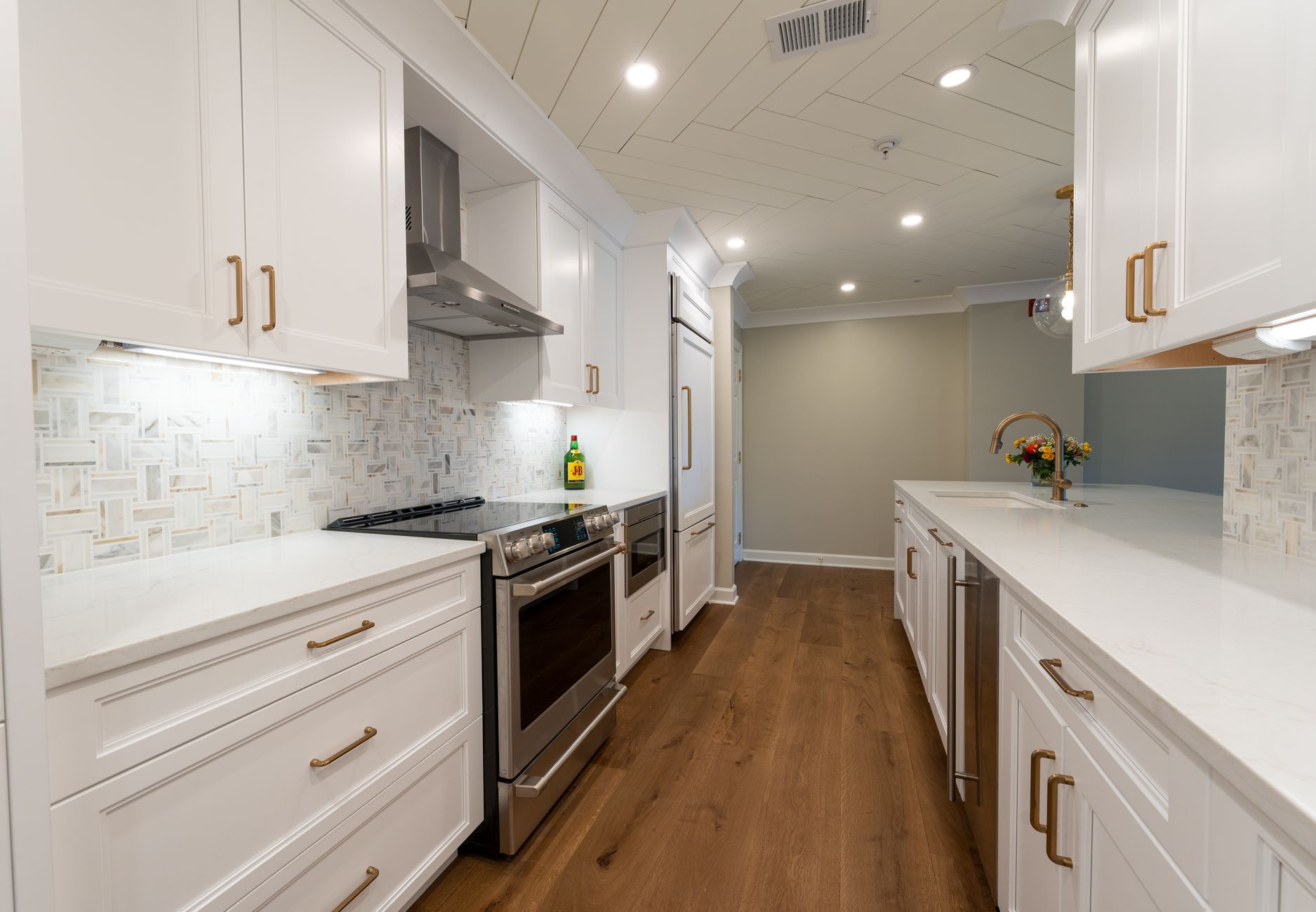
The downside of age is what’s hiding inside the walls. Knob-and-tube wiring (standard in homes built before 1940) and galvanized or cast-iron drain lines (standard into the 1960s) are the two most common discoveries that extend timelines and budgets in New Orleans kitchen remodels. These aren’t surprises that happen to unlucky homeowners. They’re baseline expectations in any pre-1960 shotgun house, and your contractor should budget for them accordingly.
Most interior kitchen remodels in Orleans Parish require a building permit, a plumbing permit, and an electrical permit. All three are applied for through the Orleans Parish Department of Safety and Permits via the NolaPermit portal at nola.gov/safety-and-permits. If your remodel is entirely cosmetic (new countertops, cabinet refacing, appliance swaps with no electrical changes), you may not need a permit. But anything involving new wiring, moved outlets, or plumbing work requires permits and inspections before walls can be closed.
Permit fees follow a straightforward formula: a $60 base fee plus approximately $5 per $1,000 of construction value, with separate fees for each trade permit. For a $25,000 kitchen remodel, expect $185 to $250 in permit fees. Plan review for a standard residential interior remodel takes 10 to 15 business days; projects with structural changes, like opening a load-bearing wall, can take up to 45 business days. Submitting complete drawings the first time is the most important thing your contractor can do to avoid adding another review cycle to that timeline.
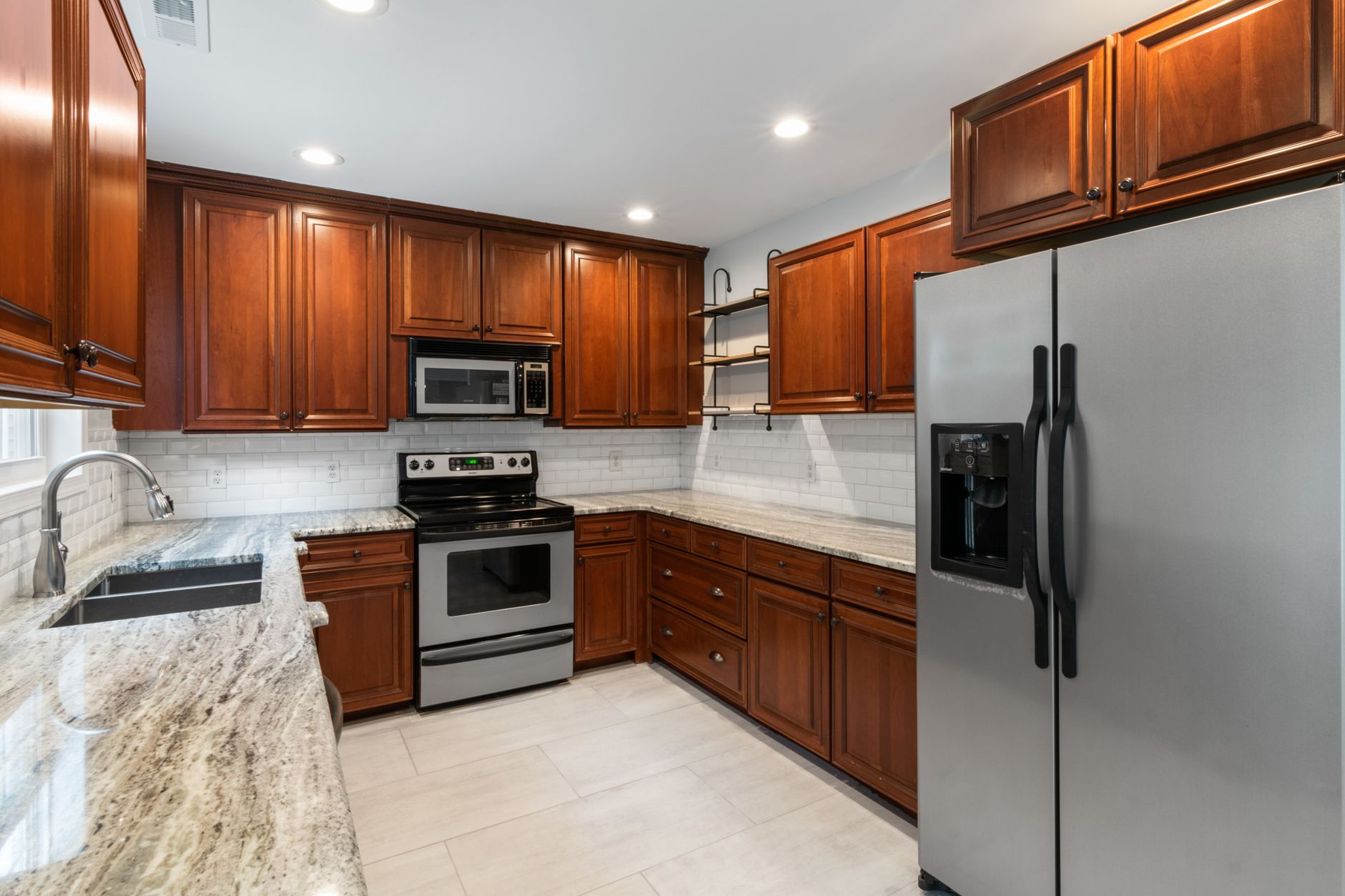
One question homeowners in historic neighborhoods consistently ask: does a kitchen remodel require Historic District Landmarks Commission (HDLC) approval? For interior kitchen work, the answer is almost always no. HDLC review and a Certificate of Appropriateness (COA) are required for exterior alterations visible from a public right-of-way: window replacements, siding changes, rear dormers. An interior kitchen remodel doesn’t trigger HDLC review, even in the Garden District or the Marigny. The exception is if your project includes a new exterior window opening or any change to the rear facade.
Most New Orleans kitchen remodels run 6 to 12 weeks from permit submission to final inspection. Projects involving structural changes, custom cabinetry, or hidden mechanical issues routinely extend to 14 to 20 weeks. The three biggest schedule drivers, in order, are cabinet lead times, the permit review window, and inspection scheduling compounded by hidden discoveries.
Custom cabinet lead times are consistently the most controllable delay, and the one homeowners most often underestimate. Stock cabinets are available immediately; semi-custom cabinets run 4 to 6 weeks from order to delivery; fully custom cabinets from local or regional cabinet shops run 8 to 14 weeks. In a shotgun house with non-standard dimensions, where a standard 12-inch-deep upper cabinet would crowd a narrow galley, custom sizing is often necessary. Order cabinets as early as possible, ideally before demolition, so they arrive when rough-in work is complete rather than sitting on the job site adding a week to the wait.
Knob-and-tube wiring is the most common hidden discovery that cascades into a genuine delay. Replacing knob-and-tube requires a licensed electrician to remove it throughout the affected circuits, not just in the kitchen zone, and scheduling an electrician on short notice in New Orleans adds 1 to 2 weeks if their calendar is booked. Cast-iron drain lines that have partially collapsed require either replacement or lining, neither of which is visible until old plumbing is exposed. Experienced local contractors build a 10 to 15% contingency buffer in both budget and schedule specifically to absorb these discoveries.
A kitchen remodel in a New Orleans historic home costs between $9,900 and $40,500 for most projects, with the midrange falling around $22,000 to $28,000. Louisiana labor and material costs run roughly 10% below the national average, but shotgun-specific complexity, narrow access, pier-and-beam plumbing reroutes, and aging mechanical systems, can push individual projects toward the high end of the local range.
The key cost variables are cabinet quality, countertop material, and whether the layout changes. A galley kitchen refresh with semi-custom cabinets, quartz countertops, and new appliances in an unchanged layout runs $18,000 to $25,000. Opening a wall to create an L-shaped or island layout adds $3,000 to $8,000 for structural engineering, temporary support, and beam installation. Knob-and-tube wiring replacement adds $1,500 to $4,000 depending on how many circuits are affected. Cast-iron drain line replacement adds $2,500 to $6,000. These aren’t optional line items, they’re code requirements once the work is open.
One useful comparison: the kitchen renovation cost in a shotgun house is often comparable to the same project in newer construction, once you factor in the pier-and-beam plumbing advantage. You’re not paying to jackhammer a slab. What you’re paying for is a contractor who knows how to work within the constraints of a narrow historic floor plan and who doesn’t underestimate the permit timeline.
The single most important criterion for hiring a contractor for a New Orleans shotgun kitchen remodel is documented local experience in historic homes, not just renovation experience generally. Contractors without New Orleans-specific experience consistently underestimate three things: the time required to get Orleans Parish permits approved, the likelihood of discovering aging mechanical systems, and the importance of pier-and-beam, specific plumbing methods.
Ask every contractor you interview how many New Orleans shotgun or historic home kitchens they’ve completed in the past two years, and request one homeowner reference from that list. Ask the reference specifically: did the project finish within the original schedule, and if not, what caused the extension? The answer tells you more about a contractor’s local competence than any portfolio photo. Also verify that the contractor pulls permits under their own contractor’s license, not yours. In Orleans Parish, a homeowner can pull their own permit, but that makes the homeowner legally responsible for all inspections and code compliance. A licensed contractor who pulls permits under their own license carries that responsibility, and carries the insurance to match.
Homeowners planning a kitchen remodel in a shotgun house often discover that adjacent spaces are worth addressing at the same time, a hall bath, a laundry closet, or a utility room, while walls are already open and contractors are already on site. Bundling related interior renovation work reduces mobilization costs and total disruption time. It’s also the most cost-effective window to upgrade electrical panels, replace aging drain lines throughout the house, or add insulation to interior walls that would otherwise stay closed for decades.
Do I need HDLC approval for an interior kitchen remodel in New Orleans?
No. HDLC review and a Certificate of Appropriateness are required only for exterior alterations visible from a public right-of-way. An interior kitchen remodel, even in a Garden District or Marigny historic district home, does not require HDLC approval. You still need the standard building, plumbing, and electrical permits from Orleans Parish Department of Safety and Permits.
How long does a New Orleans kitchen remodel take from start to finish?
Most New Orleans kitchen remodels take 6 to 12 weeks from permit submission to final inspection. Projects with structural changes, custom cabinetry, or hidden mechanical issues, knob-and-tube wiring, cast-iron plumbing, routinely run 14 to 20 weeks. The permit review window (10 to 15 business days for standard residential), cabinet lead times (4 to 14 weeks depending on type), and inspection scheduling all compound to extend the total timeline.
What’s the most common surprise cost in a New Orleans shotgun kitchen remodel?
Knob-and-tube wiring and cast-iron drain line replacement are the two most common budget surprises, each adding $1,500 to $6,000 when discovered during demolition. In any pre-1960 shotgun house, your contractor should treat these as likely rather than possible and build contingency into the original estimate rather than issuing a change order mid-project.
Does moving a kitchen sink require a permit in Orleans Parish?
Yes. Any change to plumbing supply or drain lines requires a plumbing permit in Orleans Parish. The permit triggers a rough-in inspection before walls are closed and a final inspection after the work is complete. In a pier-and-beam shotgun house, sink relocation is more straightforward than in slab homes because plumbers access drain lines from the crawlspace rather than cutting the floor.
Can I stay in my house during a kitchen remodel?
Yes, most homeowners stay in place. In a shotgun house, the kitchen is usually at the back of the house, separated from bedrooms by multiple rooms. A good contractor sets up a temporary kitchen station (microwave, coffee maker, mini fridge) in an adjacent room and seals the work area with plastic sheeting to limit dust. Plan for 4 to 8 weeks without a functional kitchen sink.
Ready to start planning your New Orleans kitchen remodel? Call Big EZ Renovations at (504) 294-8616 or request a free estimate online. We specialize in kitchen renovations in New Orleans historic homes and shotgun houses throughout Orleans, Jefferson, and St. Tammany parishes.

What You Need to Know French drain installation in New Orleans costs between $25 and $39 per linear foot, with most residential projects running $1,500 to $4,000 depending on yard size, depth, and...
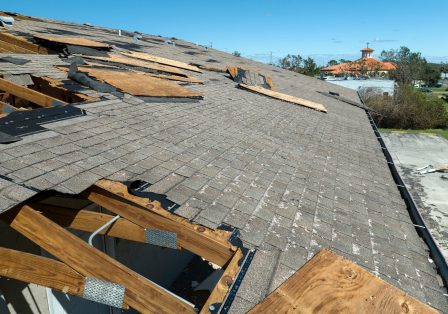
After hurricane roof damage in New Orleans, your first priorities are personal safety, preventing further water intrusion, and documenting everything before you touch it. Tarp exposed areas, photog...
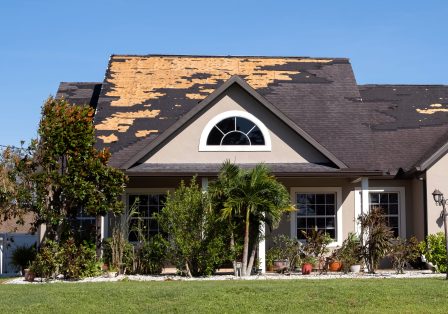
Louisiana homeowners typically have 180 days to file a roof insurance claim after hurricane damage. Insurance companies must begin adjusting your claim within 14 days (or 30 days after a catastroph...
What You Need to Know A professional roof inspection in New Orleans costs $85 to $755, with most residential inspections running $270 to $388 for a standard visit covering shingles, flashing, deck...

Big EZ Renovations applies professional roof coatings across Greater New Orleans, and the cost ranges from $0.50 to $7.00 per square foot installed in 2026 depending on the coating type, roof size,...

Roof repair in New Orleans typically costs $150 to $1,500 for minor repairs like patching leaks or replacing a few shingles. More extensive repairs involving water damage or structural issues range...
 By BigEZRenovations
  0 Comment
  Jul 14, 2026
  By
BigEZRenovations
By
BigEZRenovations  0 Comments