

Opening Hours Mon - Fri: 8:00 AM - 3:00 PMSat - Sun: Closed
New Orleans’ Trusted Renovation Experts — Transform Your
Home with Confidence- Get Your Free Estimate
Opening Hours Mon - Fri: 8:00 AM - 3:00 PMSat - Sun: Closed

Talk to an Expert504-294-8616
Opening Hours Mon - Fri: 8:00 AM - 3:00 PMSat - Sun: Closed

Most New Orleans homeowners comparing patio options focus on upfront cost and overlook the factor that determines long-term performance: how each material behaves on soil that never stops moving. New Orleans sits on alluvial clay that expands when it absorbs rainfall and contracts as it dries, repeating that cycle season after season beneath any surface installed above it. Big EZ Renovations installs paver patios and concrete slabs throughout Greater New Orleans, and the soil conversation happens on every estimate before any material gets selected.
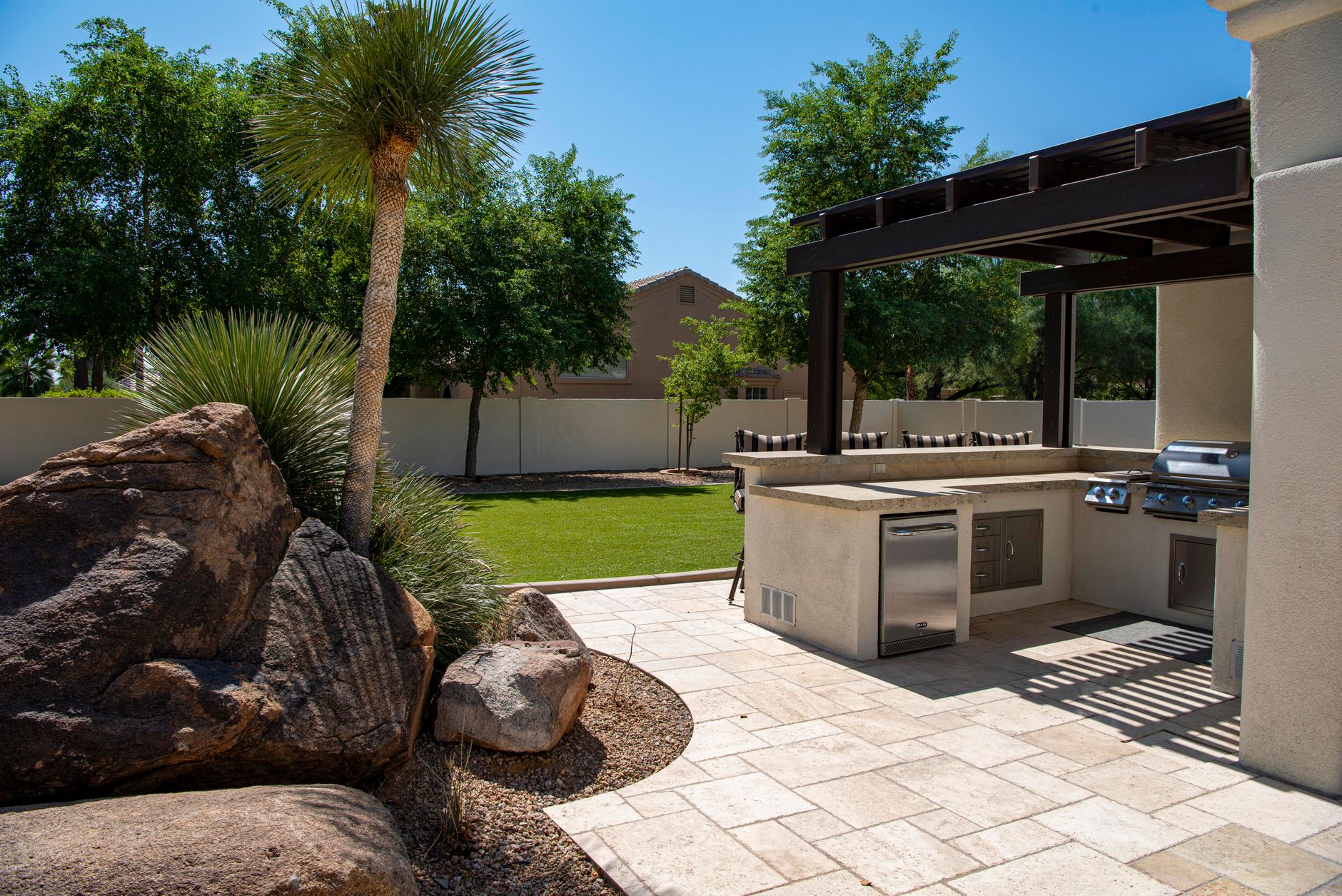
Both paver patios and concrete slabs work in this climate when they are installed with the right base preparation. The difference lies in how each material responds when the ground shifts. Concrete pours as a single rigid panel, so soil movement translates directly into cracking, heaving, or sinking that requires full section replacement. Pavers interlock as individual units with sand or aggregate joints, which means ground movement settles individual pieces without fracturing the entire surface. Big EZ Renovations handles both materials throughout Orleans, Jefferson, St. Tammany, and St. Bernard parishes.
This article covers local costs, how Louisiana clay affects each material long-term, what the city’s stormwater ordinance means for patio surface selection, and the scenarios where concrete still makes financial sense.
In This Article
Paver patio installation in New Orleans runs $14 to $17 per square foot for sand-base concrete pavers, which includes a compacted aggregate base and a one-inch sand bedding layer, according to local market data. A concrete sub-base with pavers on top adds $4 to $6 per square foot, pushing that range to $18 to $23 per square foot. The broader Louisiana market shows paver costs ranging from $9 to $45 per square foot depending on material type, pattern complexity, and site conditions.
Several factors push costs higher on New Orleans lots specifically: narrow access points on city streets, clay subgrade conditions that require more aggregate base depth than sandy soils, and the drainage slope engineering that a properly built patio requires. A 400-square-foot patio on a standard Uptown or Lakeview lot typically lands between $5,600 and $9,200 installed, including full base preparation.
Please note: The prices in this article are estimates only, shared to help you plan. Your actual cost depends on your property, the materials and the size of the job. For pricing on your project, call Big EZ Renovations for a quote.
Plain concrete patio slabs cost $4 to $15 per square foot nationally, with standard four-inch residential slabs at the lower end and decorative finishes at the upper range. In the New Orleans market, the practical installed range for a plain concrete patio runs $6 to $12 per square foot after accounting for reinforcement requirements and clay subgrade preparation.
Stamped concrete narrows the cost gap with pavers considerably. A stamped and colored concrete finish that mimics stone or brick can reach $12 to $18 per square foot installed, which overlaps directly with the lower range of paver pricing. At that price point, the comparison shifts from initial cost to durability and repairability rather than budget alone.
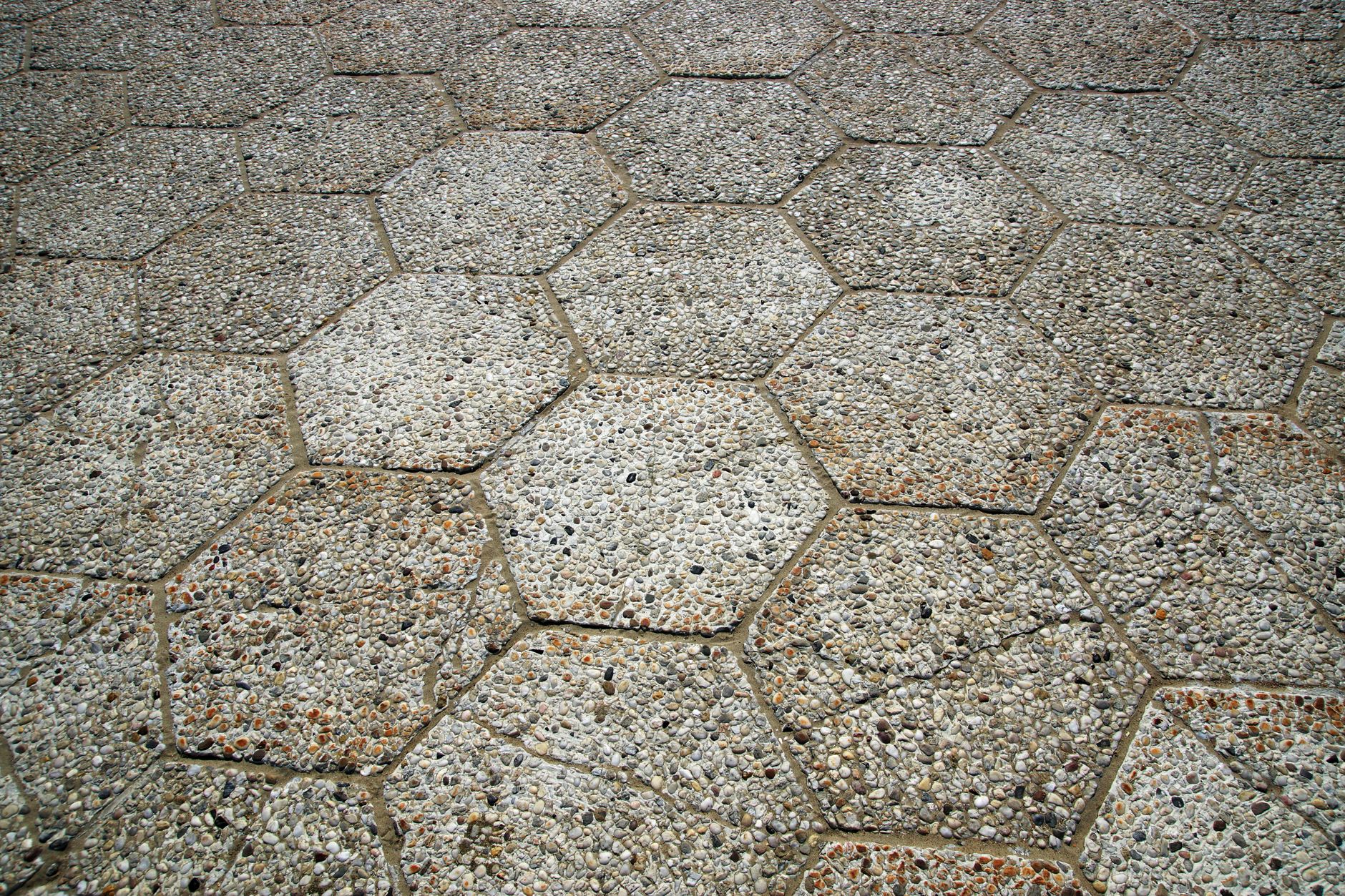
None of those installed ranges includes removing what is already there. National remodeling cost data puts demolition and haul-off of an existing four-inch patio slab at roughly $2 to $6 per square foot, with reinforced pours at the higher end, so a replacement job carries a line item that a first-time installation does not. Joint layout is the other detail worth confirming in writing before work starts. The American Concrete Institute’s floor and slab construction guide, ACI 302.1R, puts contraction joint spacing for plain, unreinforced slabs at 24 to 36 times the slab thickness, which works out to every 8 to 12 feet on a four-inch patio, with a conventional saw cut at least one inch deep made 4 to 12 hours after finishing. Those joints help control where shrinkage cracking shows up, which matters on New Orleans lots where expansive clay can move under the slab.
| Material | New Orleans Cost Range | Lifespan | Repairability |
|---|---|---|---|
| Concrete pavers (sand base) | $14 to $17 per sq ft | 50 or more years | Individual unit replacement |
| Pavers on concrete base | $18 to $23 per sq ft | 50 or more years | Individual unit replacement |
| Plain concrete slab | $6 to $12 per sq ft | 30 to 40 years | Section removal required |
| Stamped concrete | $12 to $18 per sq ft | 25 to 35 years | Difficult to match |
New Orleans soil is classified as alluvial clay, a high-shrink-swell material that absorbs water and expands during wet periods, then contracts as it dries, exerting constant pressure on any hardscape surface above it. A city-commissioned 2019 subsidence vulnerability study found that structures built directly on high-clay soils in the metro area settled measurably more over time than those on silty clay loam, and patios receive none of the foundation engineering applied to buildings.
For concrete slabs, shrink-swell clay is particularly destructive. The slab’s rigidity means it cannot flex with soil movement, so it cracks in sections. A cracked slab also creates pathways for water to intrude beneath the surface. New Orleans’ high water table compounds that problem: during wet seasons, water sits under a slab, erodes the base material, and creates voids that eventually cause visible sinking or section collapse at the surface.
Paver systems absorb soil movement differently. The aggregate base and sand bedding layer allow individual units to shift slightly without transferring stress across the entire surface. When one paver settles, the neighboring units hold their position. Repairs are localized: lift the settled unit, add bedding material beneath it, and reset. That takes an hour and costs a fraction of concrete section removal and replacement.
New Orleans operates under a stormwater management ordinance that mandates permeable pavement in many applications to reduce runoff into Lake Pontchartrain and ease pressure on the city’s drainage infrastructure. For private residential patios, the ordinance does not automatically require permeable materials, but the engineering rationale applies directly: a solid surface that sheds water fast creates peak runoff that overwhelms yard drainage and overloads catch basins already operating near capacity.
Permeable pavers with open aggregate joints absorb 3 to 5 inches of rainfall per hour, according to EPA infiltration data for permeable paving systems. A moderate New Orleans summer storm delivers 1 to 2 inches per hour at typical intensity and 3 to 4 inches per hour at peak. A properly installed permeable paver patio routes that rainfall through the aggregate base and into the soil below rather than sending it sheeting toward the foundation or into neighboring lots. Yards with persistent drainage problems after storms often benefit from combining permeable pavers on the patio surface with a French drain system at the yard perimeter.
Repairability is where the long-term cost comparison shifts most clearly in favor of pavers. Individual paving units that settle, chip, or crack can be lifted and replaced without touching the surrounding surface. Because pavers weather consistently across the entire surface over time, a replaced unit blends naturally into the existing field.
Concrete repair works the opposite way. Patches in cracked concrete rarely match the original surface color or texture after even a few months of weathering. Section replacement fixes the structural problem but creates visible seams that are difficult to conceal. Stamped or colored concrete is harder to repair: matching the original stamp pattern and pigment at a patch location is typically not achievable, which means a permanent visible mark. Over a 15-year period in New Orleans conditions, many concrete patios accumulate enough damage that full replacement becomes the more practical option. Homeowners coordinating multiple outdoor projects can find related planning guidance in our posts on exterior painting timing in New Orleans and pre-season roof inspections.
Despite the durability advantages of pavers on Louisiana clay, concrete slabs remain the right choice in specific situations. Garage approach aprons connecting to an existing floor benefit from a continuous concrete pour because it eliminates the joint movement that would occur at a paver-to-slab transition. Large flat pads under HVAC equipment or outdoor kitchen appliances also suit concrete for stable bearing support.
Budget is also a real factor. A homeowner with a firm $3,500 total budget for a 400-square-foot patio can get a functional concrete installation within that range, while pavers at that square footage would run closer to $5,600 at the lower end of the market. If the decision is between concrete now and no patio at all, a concrete slab installed with proper base preparation and correct drainage slope will perform adequately for 15 to 20 years in New Orleans conditions before needing significant attention. Contact Big EZ Renovations for a site assessment that covers both options at your specific lot conditions and budget.
Ground-level concrete slabs and paver patios that sit at or near grade, with no attached cover or structural element, typically do not require a building permit in New Orleans under the Louisiana State Uniform Construction Code. The Department of Safety and Permits handles permit applications for the city, and its guidance is that concrete flatwork at grade for residential patios and walkways falls outside the permit threshold in most cases.
Covered patios, pergolas attached to the house, and screen enclosures require a permit regardless of the paving material below. Homeowners in historic districts governed by the Historic District Landmarks Commission or the Vieux Carre Commission need design approval before any exterior work begins, including ground-level paving. Properties in FEMA-designated flood zones should confirm base flood elevation requirements before placing hardscape. Call 504-294-8616 to discuss whether any review applies before installation begins.
Paver patio installation in New Orleans costs $14 to $17 per square foot for sand-based pavers with a compacted aggregate base. Adding a concrete sub-base raises that range to $18 to $23 per square foot. Site conditions including access width, drainage requirements, and clay subgrade depth affect where a specific project lands within those ranges.
Pavers hold up better on New Orleans clay soil because individual units shift with soil movement without cracking the entire surface. Concrete poured as a rigid slab transfers all soil movement stress across the panel, which causes cracking and heaving. In a high-shrink-swell clay environment like New Orleans, that flexibility difference becomes significant within the first decade of installation.
Ground-level paver and concrete patios typically do not require a building permit in New Orleans under the state uniform code. Covered patios, attached pergolas, and screen enclosures do require permits. Homeowners in historic districts governed by the HDLC or Vieux Carre Commission need design approval from those bodies before starting any exterior work, including ground-level paving.
Yes. Permeable pavers with open aggregate joints absorb 3 to 5 inches of rainfall per hour, compared to zero infiltration from a solid concrete slab. In a city where peak summer storms deliver 2 to 4 inches per hour and the drainage system operates near capacity, routing patio rainfall through a permeable base reduces runoff and standing water at the yard perimeter.
A concrete slab patio installed with proper base preparation lasts 30 to 40 years nationally, but New Orleans conditions shorten that in many cases. Shrink-swell clay, a high water table, and intense rainfall accelerate cracking and base erosion. Many New Orleans concrete patios require significant repairs or section replacement within 15 to 20 years of installation.
Yes. Individual pavers that settle or shift can be lifted, the bedding material leveled or added beneath, and the unit reset in place. The repair typically takes a few hours and costs a fraction of concrete section removal. Because pavers weather consistently across the whole surface, a reset unit blends naturally without the patch mismatch that concrete repairs create.
New Orleans homes lose paint adhesion fastest on walls that trap moisture behind the coating, and the culprit is almost always vapor rather than a bad paint job. Big EZ Renovations, licensed by the...
Quick Summary Ornamental iron gates are a defining feature of New Orleans architecture, but the city’s hot-humid climate, classified as IECC Climate Zone 2A, and annual average humidity of 7...

A FORTIFIED roof in Louisiana costs $4.40-$6.90 per square foot, or roughly $8,800-$13,800 for a 2,000 sq ft home, only 10-15% more than a standard replacement. The Louisiana Fortify Homes Program ...
Quick Summary Bathroom renovation in New Orleans, Louisiana requires a permit from the Orleans Parish Department of Safety and Permits before any plumbing, electrical, or structural work begins. M...
Quick Summary Cellulose insulation absorbs moisture from New Orleans's ambient humidity, compresses over time, and loses the R-value it was installed to deliver, making it a poor long-term choice ...
What You Need to Know A professional roof inspection in New Orleans costs $85 to $755, with most residential inspections running $270 to $388 for a standard visit covering shingles, flashing, deck...
 By BigEZRenovations
  0 Comment
  Aug 25, 2026
  By
BigEZRenovations
By
BigEZRenovations  0 Comments