

Opening Hours Mon - Fri: 8:00 AM - 3:00 PMSat - Sun: Closed
New Orleans’ Trusted Renovation Experts — Transform Your
Home with Confidence- Get Your Free Estimate
Opening Hours Mon - Fri: 8:00 AM - 3:00 PMSat - Sun: Closed

Talk to an Expert504-294-8616
Opening Hours Mon - Fri: 8:00 AM - 3:00 PMSat - Sun: Closed

What You Need to Know
Big Easy Renovations fabricates and installs custom ironwork across New Orleans, Louisiana, Metairie, Kenner, and the surrounding parishes, including balcony railings, iron fences, driveway gates, and ornamental pieces for properties governed by the Historic District Landmarks Commission (HDLC). Custom ironwork in New Orleans typically costs $60 to $200 or more per linear foot installed for iron fencing, and $120 to $500 per linear foot for balcony and gallery railings, depending on design complexity, metal type, and site conditions. Properties in any of the 14-plus HDLC-regulated historic districts, including the Marigny, Treme, Bywater, and Garden District, require a Certificate of Appropriateness (COA) before exterior ironwork is installed or altered. Big Easy Renovations is licensed by the Louisiana State Licensing Board for Contractors (LSLBC) under Residential Contractor License #890459 and Commercial Contractor License #3667, and coordinates fabrication, installation, and permit documentation for clients across Orleans Parish, Jefferson Parish, and St. Tammany Parish.
Last Updated: October 2026
Custom ironwork in New Orleans, Louisiana costs more than comparable work in most U.S. cities because the city’s subtropical humidity, salt air, hurricane wind loads, and historic district design controls all shape what gets fabricated, how it gets installed, and what permits must be secured before work begins. Big Easy Renovations handles custom ironwork fabrication and installation in the Greater New Orleans area for residential and commercial clients across Orleans Parish, Jefferson Parish, and St. Tammany Parish, using LSLBC license numbers #890459 (residential) and #3667 (commercial) that cover both fabrication and any structural attachment work the project requires.
The ornamental metalwork that defines the French Quarter, the Garden District, and the Marigny streetscape dates to the early 1800s, and that legacy shapes what the Historic District Landmarks Commission expects from new and restored ironwork today. Most homeowners planning a railing or fence project are surprised to learn how much the COA process affects their timeline, or how much New Orleans climate conditions affect which finishes actually last. Big Easy Renovations brings both fabrication expertise and firsthand knowledge of the local permit process to every ironwork project it takes on.
Understanding what fabrication actually costs, what design controls apply in regulated neighborhoods, and how New Orleans conditions affect material performance helps property owners make better decisions before they sign a contract or select a design.
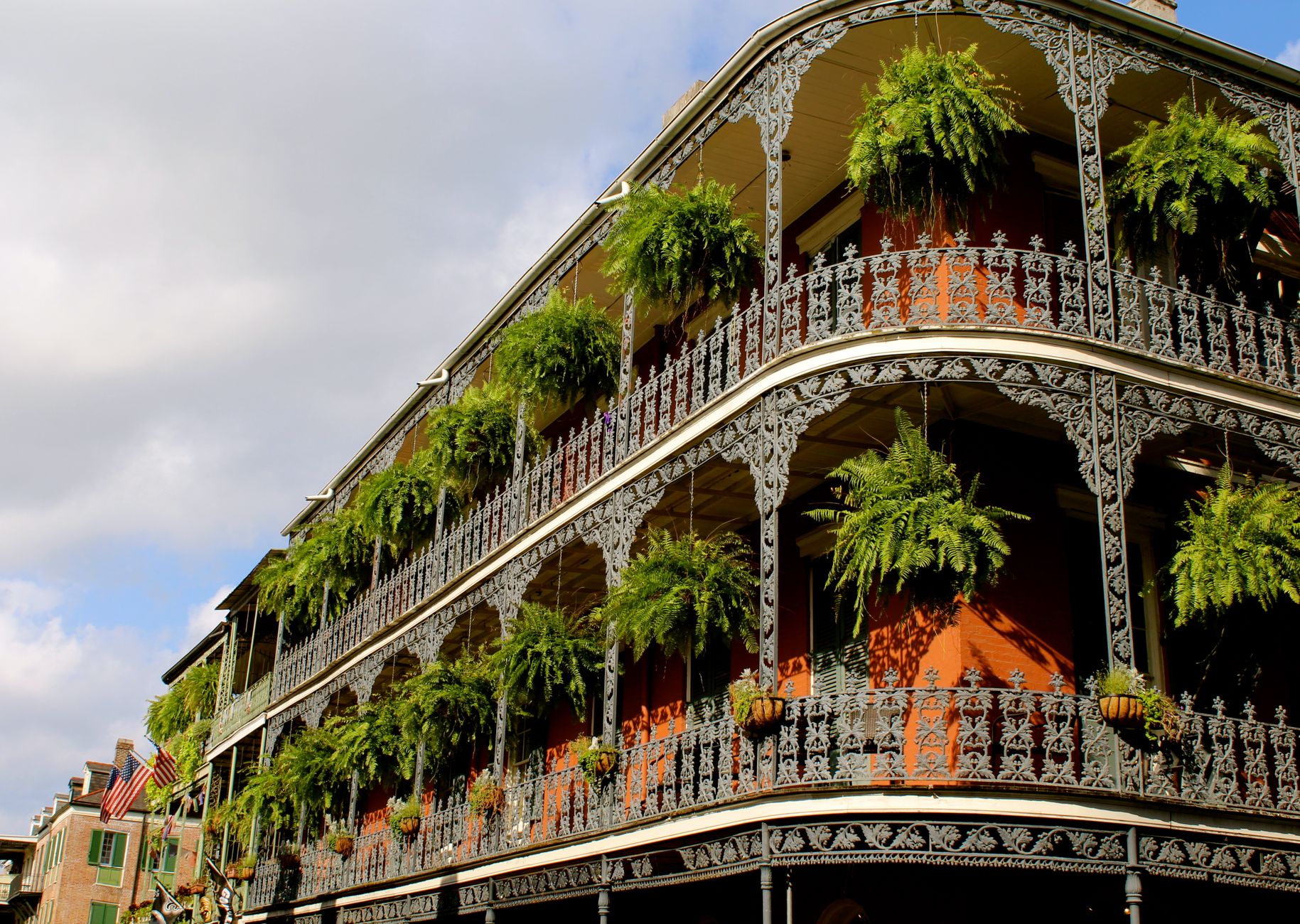
Installed balcony and gallery railings in New Orleans run $120 to $350 per linear foot for standard exterior porch applications, and $200 to $500 per linear foot for gallery railings that require heavier structural components and more elaborate fabrication. Those ranges reflect Greater New Orleans market conditions, which differ from national averages because older building stock and Gulf Coast wind load requirements add structural complexity that standard railing installations elsewhere do not face.
Gallery railings on a double shotgun house in the Seventh Ward or a raised cottage in the Irish Channel carry higher costs than a simple interior stair railing because the structural attachment points must support both occupant loading and storm wind forces. Contractors typically spec anchor bolts, lag screws, and sometimes steel posts set into the framing to meet Orleans Parish Building Department requirements for exterior railings. The finish matters equally as much as the structure. Hot-dip galvanizing under powder coat adds cost upfront but extends service life in New Orleans’ IECC Climate Zone 2A environment, which combines high humidity, salt air, and summer heat cycles that strip bare or paint-only finishes within a few years.
Interior stair railings cost significantly less because they are not exposed to weather and do not require the same anchoring strategy. A custom interior railing on a pier-and-beam New Orleans home typically runs $80 to $200 per linear foot installed, depending on design complexity and the condition of the existing stair framing.
Custom iron fencing in New Orleans costs $60 to $200 or more per linear foot fully installed. Standard ornamental iron at a simpler picket pattern sits near the lower end of that range, while highly custom designs with scrollwork, finials, or historic-pattern replication push past $100 per linear foot. Gates require their own hardware, posts, and sometimes automation components, adding $800 to $2,000 or more per gate depending on width and configuration.
| Ironwork Type | Typical Installed Cost | Primary Cost Drivers |
|---|---|---|
| Standard ornamental iron fence | $30 to $70 per lf | Simple pattern, stock panel components |
| Custom-fabricated iron fence | $85 to $200+ per lf | Design complexity, historic pattern replication |
| Driveway or courtyard gate | $800 to $2,000+ | Width, automation, post depth requirements |
| Exterior porch railings | $120 to $350 per lf | Structural anchoring, wind load design, finish |
| Gallery balcony railings | $200 to $500 per lf | Heavy fabrication, historic design review, access |
Residential fence permits from the City of New Orleans Department of Safety and Permits cost approximately $80 for most projects. That permit fee is separate from fabrication and installation costs. Work in HDLC-regulated neighborhoods requires a Certificate of Appropriateness before the permit application can be completed, which adds time to the pre-construction phase.
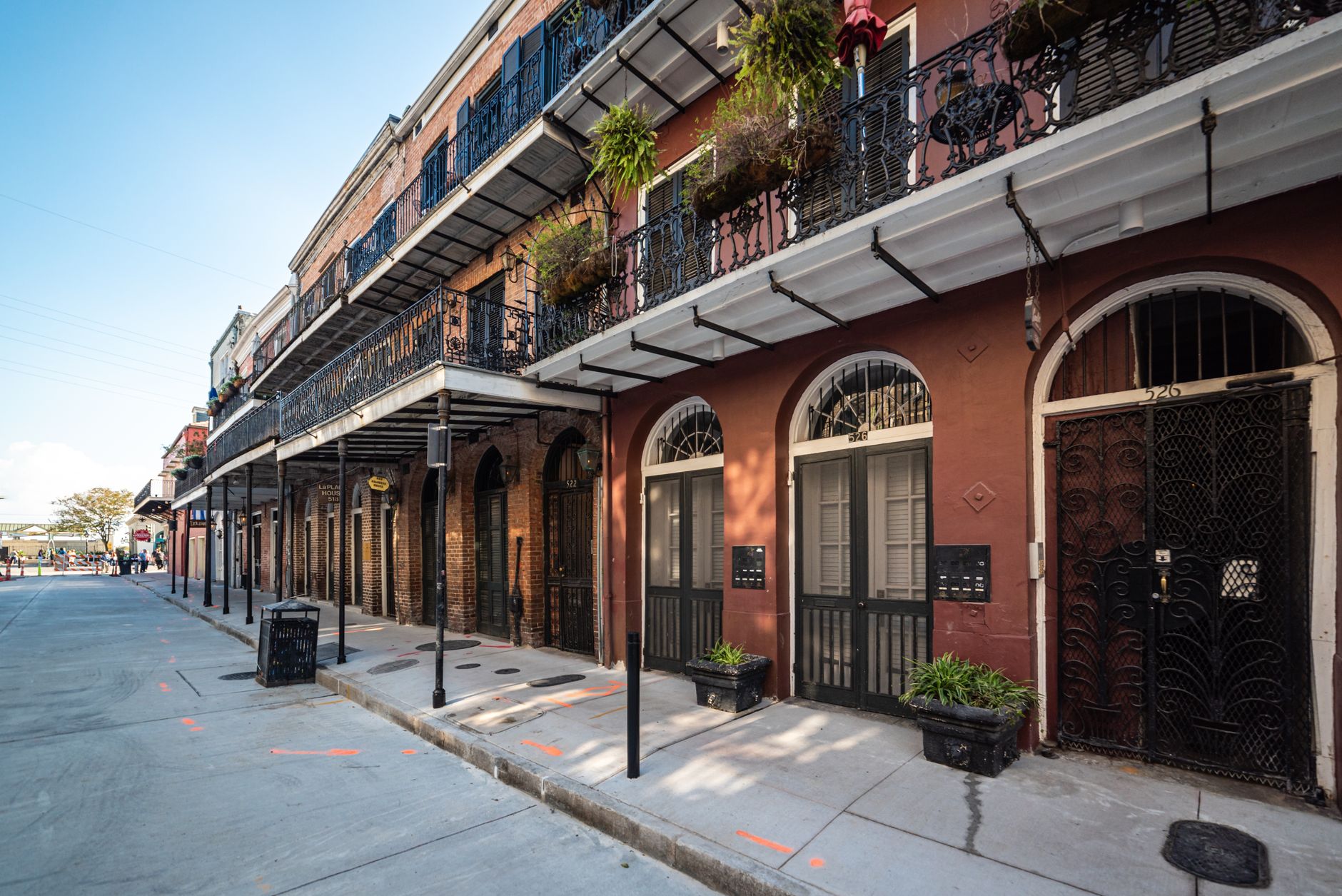
Most of the decorative ironwork visible in New Orleans today is cast iron, not wrought iron, despite what the word “wrought” on many contractor websites suggests. Wrought iron is hand-forged at high heat by a blacksmith and contains very little carbon. Cast iron is poured into molds and reproduces detailed ornamental patterns far more efficiently. The shift to cast iron manufacturing in New Orleans accelerated after 1825, when the Leeds Iron Foundry opened on what is now the Preservation Resource Center site on Camp Street, becoming the city’s first local cast iron foundry. Early ornamental ironwork in the Vieux Carre was made by Spanish-era blacksmiths and, according to historian Marcus Christian’s research, in significant part by enslaved West African blacksmiths whose craft shaped the city’s ornamental vocabulary.
That historical distinction matters for renovation work today because homeowners replacing damaged or missing sections of an older fence or railing need to match the original fabrication method and visual pattern. The Historic District Landmarks Commission reviews replacement designs for compatibility with the existing ironwork on the block, and a replacement section that doesn’t match the historic pattern in profile or scale creates problems at the COA stage. Contractors familiar with New Orleans ironwork history know which patterns derive from cast iron mold traditions and can fabricate modern reproductions using structural steel that visually matches the original.
Modern custom ironwork fabricators across Greater New Orleans typically use structural steel tubing and plate, powder-coated in black or a custom color, to achieve the visual weight of historical ironwork while meeting current building codes. A contractor proposing galvanized steel framing with powder-coated ornamental panels is offering a code-compliant, climate-appropriate approach. One proposing raw mild steel with a brush-coat of paint is setting the property owner up for active rust within two to three years in New Orleans’ humid, salt-influenced environment.
Yes. Properties in any of the 14-plus historic districts regulated by the Historic District Landmarks Commission (HDLC) in Orleans Parish require a Certificate of Appropriateness before exterior ironwork is installed, replaced, or significantly altered. The HDLC covers neighborhoods including the Marigny, Treme, Bywater, Mid-City, Garden District, Irish Channel, Algiers Point, Uptown, Lakeview, Seventh Ward, Holy Cross, Central City, and the Lower Garden District. Properties in the French Quarter (Vieux Carre) fall under the Vieux Carre Commission (VCC) rather than the HDLC, but the design review requirement is the same. Homeowners can review the applicable guidelines at nola.gov’s HDLC page before beginning any design work.
The COA process for exterior ironwork typically follows these steps:
The HDLC generally approves traditional ironwork patterns, including simple picket, fleur-de-lis, and scrollwork designs that are visually compatible with the surrounding block. Non-standard designs, aluminum substitutes for iron, or vinyl railings in place of historic ironwork face higher scrutiny and often require a full Commission hearing. Big Easy Renovations works throughout Orleans Parish’s historic districts and advises clients on design compatibility before fabrication begins, which prevents the rejection-and-resubmission cycle that drives up both cost and project timelines.
Jefferson Parish properties in Metairie, Kenner, and Gretna are permitted through Jefferson Parish Inspection and Code Enforcement rather than the HDLC, and historic district overlays are far less common there. St. Tammany Parish projects in Mandeville, Covington, and Slidell go through St. Tammany Parish Permits and Inspections. Across all jurisdictions, contractors must hold an active LSLBC license to perform structural installation work in Louisiana.
Seven factors account for most of the price variation in custom ironwork quotes across Greater New Orleans. Understanding which ones apply to a specific project helps property owners evaluate competing bids more accurately.
Outdoor ironwork projects often intersect with other exterior work. Gate installation in Orleans Parish and Jefferson Parish follows the same permit and HDLC review path as iron fencing, and a contractor who handles both fabrication and permit coordination under one contract avoids the scheduling delays that arise when those responsibilities are split. Similarly, homeowners planning a patio or outdoor living space often find that ironwork fencing or a perimeter gate is part of the same project scope, which makes a full-service contractor more efficient than coordinating multiple trades.
Does New Orleans have height limits for iron fences?
The City of New Orleans Department of Safety and Permits limits front yard fences to a maximum of 3.5 feet in most residential zones, while side and rear yard fences can typically reach 6 feet. Properties in HDLC-regulated historic districts must also match the fence height precedent established by neighboring structures, which the Historic District Landmarks Commission reviews before issuing a Certificate of Appropriateness.
Can I use aluminum railings instead of iron in a New Orleans historic district?
The Historic District Landmarks Commission generally does not approve aluminum railings as substitutes for ironwork on street-facing facades in Orleans Parish’s regulated historic districts, because aluminum lacks the visual weight and profile of cast iron or steel. Properties in the French Quarter face the same restriction under the Vieux Carre Commission. Aluminum may be approved on a case-by-case basis for non-visible rear elevations where design review is less stringent.
How long does custom ironwork last in New Orleans?
Custom ironwork with hot-dip galvanizing under powder coat can last 20 to 30 years in Greater New Orleans before significant maintenance is needed. Bare steel or paint-only finishes typically show active rust within 3 to 5 years in the city’s IECC Climate Zone 2A environment, which combines year-round high humidity, salt air near coastal and lakefront properties, and summer heat cycles that stress coatings.
Who issues ironwork and fence permits in Jefferson Parish?
Jefferson Parish Inspection and Code Enforcement handles fence and railing permits for properties in Metairie, Kenner, Gretna, Harahan, and River Ridge. Jefferson Parish does not maintain a historic district landmarks body equivalent to New Orleans’ HDLC for most residential areas, so design review requirements are less common. All contractors performing structural installation work in Jefferson Parish and across Louisiana must hold an active Louisiana State Licensing Board for Contractors (LSLBC) license.
Can an existing iron fence be repaired rather than fully replaced?
Most iron fence sections can be repaired by welding, re-fabricating damaged panels, or replacing individual pickets and posts, provided the original metal is structurally sound enough to accept a weld. Older cast iron requires a different welding process than modern mild steel, and misidentifying the base metal produces a brittle weld that fails under stress. Full replacement typically becomes more cost-effective when more than 40 to 50 percent of a fence run needs panel-level repair.
Does Big Easy Renovations handle ironwork fabrication and installation together?
Big Easy Renovations handles custom ironwork fabrication, installation, and permit coordination for residential and commercial clients across New Orleans, Louisiana, Metairie, Kenner, Gretna, Slidell, Mandeville, Covington, and the surrounding parishes. The company holds LSLBC Residential Contractor License #890459 and Commercial Contractor License #3667, which covers both the ironwork scope and any structural attachment or repair work the project requires, so homeowners do not need to coordinate separate fabrication and installation contractors.
What other outdoor construction services work alongside ironwork projects?
Ironwork fencing, railings, and gates frequently pair with outdoor living construction in New Orleans. Homeowners adding an outdoor kitchen or covered entertaining area often need perimeter fencing or decorative gates as part of the same scope. Coordinating those trades under one LSLBC-licensed contractor simplifies permitting and reduces the risk of scheduling conflicts between fabrication, concrete, and finish trades.
Ready to move forward on a custom ironwork project? Call Big Easy Renovations at (504) 294-8616 to discuss your project. The team handles complete ironwork for historic district properties across New Orleans and the surrounding parishes, including HDLC and VCC documentation, fabrication, and installation under the same licensed contract. You can also schedule a consultation online and a team member will follow up within one business day.
Louisiana homeowners typically have 180 days to file a roof insurance claim after hurricane damage. Insurance companies must begin adjusting your claim within 14 days (or 30 days after a catastroph...

The best time to lay sod in New Orleans is September through mid-October, followed closely by March through May. Both windows offer warm soil, manageable air temperatures, and enough natural rainfa...
Quick Summary A New Orleans roof with isolated damage on a single section and fewer than 15 years of service can usually be repaired rather than replaced. Big Easy Renovations, licensed by the Lou...
Quick Summary Cellulose insulation absorbs moisture from New Orleans's ambient humidity, compresses over time, and loses the R-value it was installed to deliver, making it a poor long-term choice ...
What You Need to Know A professional roof inspection in New Orleans costs $85 to $755, with most residential inspections running $270 to $388 for a standard visit covering shingles, flashing, deck...
Quick Summary: A kitchen remodel in a New Orleans shotgun house costs $9,900 to $40,500 and typically takes 6 to 12 weeks. Pier-and-beam foundations, aging plumbing, and knob-and-tube wiring add co...
 By BigEZRenovations
  0 Comment
  Oct 13, 2026
  By
BigEZRenovations
By
BigEZRenovations  0 Comments