

Opening Hours Mon - Fri: 8:00 AM - 3:00 PMSat - Sun: Closed
New Orleans’ Trusted Renovation Experts — Transform Your
Home with Confidence- Get Your Free Estimate
Opening Hours Mon - Fri: 8:00 AM - 3:00 PMSat - Sun: Closed

Talk to an Expert504-294-8616
Opening Hours Mon - Fri: 8:00 AM - 3:00 PMSat - Sun: Closed

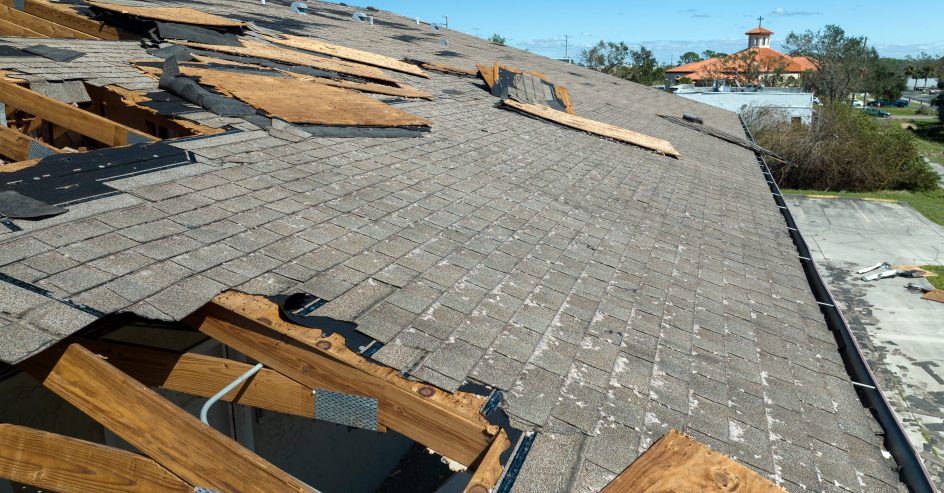
After hurricane roof damage in New Orleans, your first priorities are personal safety, preventing further water intrusion, and documenting everything before you touch it. Tarp exposed areas, photograph damage from multiple angles, file your insurance claim within 24 hours, and avoid signing contracts with storm-chasers who show up uninvited. The sequence matters more than speed.
The storm passed. You can hear generators humming through the neighborhood, and there is a wet stain spreading across your bedroom ceiling that was not there yesterday. Missing shingles. Lifted flashing. Maybe worse.
Every instinct says fix it now.
Ignore that instinct. Homeowners who grab a ladder and start pulling debris off the roof, or who sign the first contract a storm-chaser puts in front of them, end up in fights with their insurance company six months later. The damage was never photographed. The contractor vanished. The claim gets denied for “insufficient documentation.” We see this play out across New Orleans after every named storm.
This guide covers exactly what to do after hurricane roof damage in New Orleans, and the order matters. Rearrange these steps and you create problems that are expensive to undo.
Forget the roof for a minute. Downed power lines kill people. Gas leaks kill people. A missing shingle does not.
Walk the perimeter from ground level. Look for a sagging roofline, cracked or displaced walls, standing water pooling near the foundation. Smell gas? See sparking wires? Leave. Call Entergy or your gas provider before you do anything else.
New Orleans homes in Gentilly, Lakeview, the Lower Ninth, and parts of Mid-City often have aging electrical systems that become genuinely dangerous after storm surge or heavy wind events. The wiring was marginal before the hurricane. Afterward, it is unpredictable.
Do not get on the roof. Full stop. Saturated decking can give way under your weight even when the shingles above look fine. The only safe assessment after a hurricane comes from a professional roof inspection with proper fall protection and the experience to know what compromised decking feels like underfoot.
This step makes or breaks your insurance claim. Skip it and you are gambling thousands of dollars on the adjuster’s generosity.
Photograph the damage exactly as the storm left it. Before you tarp. Before you sweep. Before you drag that tree limb off the driveway. Adjusters and supplemental reviewers want unaltered, time-stamped evidence. They are trained to spot cleaned-up scenes, and a tidy yard with a conveniently damaged roof raises questions you do not want to answer.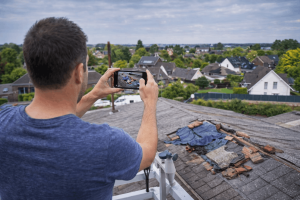
Here is what to shoot:
Pull out your phone and capture every roof plane visible from the ground. Get close-ups of missing shingles, curled edges, cracked ridge caps, damaged flashing around vents and chimneys. Go inside. Photograph ceiling stains, water running down walls, wet insulation in the attic, daylight visible through the roof deck. If you can see sky from your attic, your adjuster needs to see that photo.
Take more than you think you need. Fifty photos is a starting point, not overkill. Wide shots that show the full roofline from each side of the house. Tight shots of every individual damaged area. And do not forget secondary indicators.
Hail damage shows up on soft metals first. Dented gutters, dinged downspouts, pockmarked HVAC covers. Adjusters use those marks to confirm impact patterns across the whole property. Documenting them strengthens your case for comprehensive hail damage roof repair, even if the shingles do not look terrible from the street.
Save displaced shingles or flashing if you can store them. Physical evidence settles disputes faster than photos alone.
Documentation done? Good. Now stop the bleeding.
Louisiana insurance policies require you to mitigate further damage. That language matters. If you leave an exposed roof section open and rain destroys your living room ceiling, your insurer can argue you failed to mitigate and reduce your payout accordingly. The legal term is “failure to preserve property.” The practical result is a smaller check.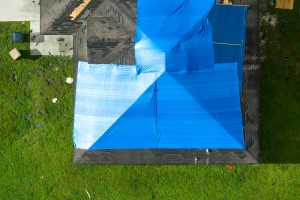
Emergency tarping is straightforward but the execution is where problems start. A properly weighted and anchored tarp over exposed decking prevents what would be a roof-only claim from becoming a roof-plus-mold-plus-drywall-plus-flooring claim. In New Orleans, where relative humidity rarely drops below 75%, mold can establish itself in as little as 48 hours after water reaches drywall or insulation. Not a week. Two days.
Keep every receipt. Every single one. Tarp materials, contractor labor, even the gas you put in a generator to run dehumidifiers. Most policies reimburse these temporary repair costs, but “I paid some guy cash” without an itemized receipt gets you nothing.
A warning about door-knockers. Within 24 hours of any hurricane making landfall near New Orleans, trucks with out-of-state plates start rolling through damaged neighborhoods offering “free tarps.” That tarp is rarely free. It comes attached to a contract, sometimes with an Assignment of Benefits clause buried in the fine print. Read every document before you sign. If they pressure you to decide on the spot, that tells you everything you need to know.
Not because the deadline is tight. Because the adjuster queue fills up fast.
Homeowners who call their insurer on Day 1 typically see an adjuster within 48 hours. Wait a week and you might wait a month. After a major hurricane, that gap stretches even further. Every day you delay is a day longer your home sits under a tarp.
When you make the call, be specific and organized. Give your address, the date of the storm, and a short summary of what you documented. Ask for three things: your claim number, the direct contact for your assigned adjuster, and a list of any forms they require.
Know your rights here. Under Louisiana Revised Statute 22:1892, insurers have 30 days to pay an undisputed claim after receiving satisfactory proof of loss. Blow past that deadline without a legitimate reason and the insurer is exposed to bad faith penalties.
Federally declared disasters extend the proof-of-loss window to at least 180 days under La. R.S. 22:1264. That breathing room matters when neighborhoods are gutted and documentation takes longer to compile. But longer deadline does not mean wait longer to file. File now. Supplement later. The two are not in conflict.
Send a follow-up email the same day. Attach your photos. Reference your claim number. Write a brief summary. This paper trail protects you if the insurer later claims they never received adequate documentation. Phone calls disappear. Emails do not.
Because it does.
The adjuster visit is the single event that sets the dollar figure your insurer will pay. Underprepared homeowners walk away with estimates that cover half the actual repair. By the time they realize the number is low, the adjuster has moved on to the next house.
Organize your photos by location before the adjuster arrives. North elevation. South elevation. Attic. Kitchen. Bedroom. Separate folder for each. Print a timeline: when the storm hit, when you discovered damage, what emergency repairs you did, receipts attached. You want the adjuster to walk into a situation where every question already has an answer.
Now the part that changes everything: have a roofing contractor on site during the inspection.
Not afterward. During.
A contractor who works in the New Orleans market, who knows how these roofs are built, where they fail, and what storm damage looks like on a 20-year-old architectural shingle in this humidity brings something the adjuster cannot. Adjusters are inspecting 15 homes today. They are using Xactimate pricing that may not reflect local labor rates. Your contractor is looking at one roof, yours, and they are looking for every damaged component, not just the obvious ones.
If the estimate comes back low, you do not have to accept it. Request a re-inspection. File a supplement when your contractor finds damage the initial visit missed. This is standard process, not confrontation.
Urgency is the enemy of good decision-making here. Hurricanes create a contractor gold rush, and not all of the people chasing that gold are qualified to touch your roof.
Out-of-state contractors flood into New Orleans after every named storm. Some do quality work. Others collect deposits and disappear. The homeowner who signed a contract 48 hours after the storm because they “just wanted it fixed” is the homeowner calling us three months later asking for help with a half-finished job and an unresponsive contractor.
Verify licensing. Louisiana residential and commercial license numbers are public record. Check general liability and workers’ compensation insurance, and confirm the policy is active, not expired. Ask for references from storm damage projects specifically.
Replacing a roof under normal circumstances and navigating a storm damage repair through an insurance claim are different skill sets. Your contractor needs both. Storm work means coordinating with adjusters, reading insurance scopes, identifying items for supplemental claims, and understanding what the insurer’s line-item estimate actually covers versus what it should cover.
A proper contractor provides a line-item proposal with materials specified, labor broken out, timeline committed, and the scope mapped directly against the insurance estimate. If the proposal is a single number on a half-sheet of paper, walk away.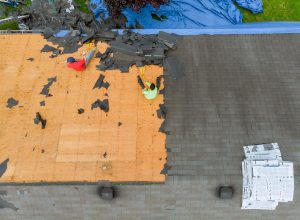
What should disqualify a contractor immediately:
None of these are gray areas. Any one of them is enough to move on. For guidance on what roof replacement should look like when done properly, check our service page for the scope and process we follow.
Insurance payments confuse homeowners because they almost never arrive as one check for the full amount. Expecting a single lump sum and getting a partial payment creates panic, and panicked homeowners make bad financial decisions.
Here is how it typically works. The adjuster inspects. The insurer issues a first payment based on their estimate, minus your deductible. If your policy is Replacement Cost Value (RCV), they withhold depreciation from that initial check. You get the depreciation back after repairs are finished and you submit a final invoice proving the work was done. If your policy is Actual Cash Value (ACV), the depreciation is gone. You never recover it. That gap between RCV and ACV payouts on a full roof claim can be $3,000 to $6,000 or more.
Know which policy you have before the check arrives. Not after.
Mortgage holders face an extra complication. The insurance check is usually co-payable to you and your lender. You cannot cash it or deposit it without the mortgage company’s endorsement. Some lenders process endorsements in a week. Others take 30 to 60 days and release funds in stages tied to repair milestones. Contact your mortgage company the same week you file the claim. Ask what their process is. Ask how long it takes. This single step prevents a bottleneck that delays your entire repair timeline.
Louisiana law also protects you on overhead and profit. Under La. R.S. 22:1892 F, when three or more trades are needed for the repair, such as roofing, drywall, and painting, the insurer must include O&P in the loss payment when a general contractor is reasonably needed for the repair. The standard industry threshold is three or more trades.
Many initial estimates leave it out. Your contractor can and should supplement for it. For a sense of what repair work typically costs in this market, our breakdown of roof repair costs in New Orleans covers the ranges by damage type.
Not every hurricane-damaged roof needs to come off entirely. But homeowners consistently underestimate where the tipping point sits.
Once damage covers more than 25-30% of the roof surface, most carriers approve full replacement. Patching a third of a roof and leaving the rest creates a mismatched system where new materials meet old, sealant meets weathered flashing, and the “repaired” roof starts leaking at the transition lines within a couple of years.
Decking condition is the other deal-breaker. Saturated or delaminating OSB loses its ability to hold fasteners. You can lay perfect shingles on top of rotted decking and they will still fail. A 15-year-old asphalt shingle roof that took a direct hit from a Category 2 hurricane almost always falls into the replace category, especially in New Orleans where that roof was already fighting UV degradation and humidity for the last decade.
There is a financial angle here too. A new roof is one of the renovations that increase home value the most in the New Orleans market. If you are already facing major damage, full replacement serves double duty: it solves the immediate problem and adds equity. A patched roof does neither.
For borderline situations, a thorough roof inspection that documents every damaged section, photographs decking from inside the attic, and catalogs pre-existing wear is what separates a confident decision from an expensive guess.
Big EZ Renovations provides licensed, insured storm damage roof inspections and repairs across New Orleans, Metairie, Kenner, Gretna, Slidell, and the surrounding areas. We work directly with your insurance company, attend adjuster inspections on your behalf, and provide detailed documentation to support your claim.
Call 504-294-8616 or schedule your free estimate online to get your recovery started.
No. Louisiana law gives you the right to hire any licensed contractor. Insurers may suggest “preferred vendors,” but those contractors answer to the insurance company, not to you. A preferred vendor has zero incentive to find damage the insurer’s estimate missed. Choose a local contractor who will advocate for the full scope of repairs and show up for the adjuster inspection on your behalf.
Only if you can reach the damaged area safely from a ladder on a single-story section. Anything higher, anything on a steep pitch, anything involving compromised decking, hire a professional. Tarp labor is reimbursable through your claim with proper receipts. Emergency rooms are full after hurricanes. Do not add yourself to the count over a tarp job.
Most policies require “prompt” reporting, and the specific window varies by carrier. Declared disasters extend the formal proof-of-loss deadline to at least 180 days. But the real constraint is the adjuster queue. Filing on Day 1 versus Day 10 can mean the difference between a 48-hour adjuster visit and a 30-day wait. The deadline is less important than the backlog.
Have your contractor prepare a supplement, a detailed, line-item document showing every damaged component the original estimate missed, with photos and measurements. Saturated decking, damaged underlayment, flashing failures at penetrations, code-required upgrades. These are the items that get left off initial estimates after major storms because adjusters are moving fast. If the supplement gets denied and the underpayment is significant, a public adjuster or insurance attorney becomes worth the cost.
Coverage-wise, both fall under windstorm or named-storm provisions. The real difference hits your wallet through the deductible. Many Louisiana policies carry a separate hurricane deductible, often 2-5% of the dwelling coverage amount, that activates only when the National Weather Service classifies the event as a hurricane. On a $250,000 dwelling policy, that is $5,000 to $12,500 out of pocket before insurance pays a dollar. Tropical storm damage typically falls under your standard deductible, which is almost always lower.
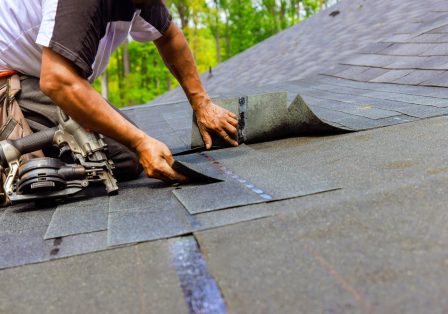
Roof repair in New Orleans typically costs $150 to $1,500 for minor repairs like patching leaks or replacing a few shingles. More extensive repairs involving water damage or structural issues range...

Ever wondered which room in your home could give you the best return on investment when renovated? You're not alone. Home renovation is a hot topic among homeowners, with many seeking to improv...
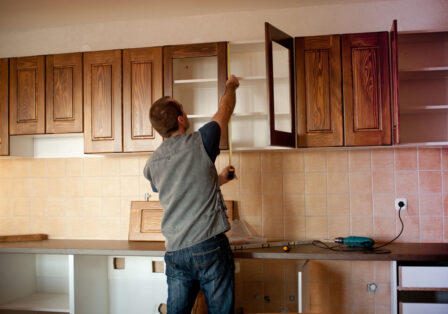
Starting a home renovation is like opening a door to a world of possibilities, where your living space can be transformed into something truly remarkable. At Big EZ Renovations, we appreciate the i...
 By BigEZRenovations
  0 Comment
  Feb 27, 2026
  By
BigEZRenovations
By
BigEZRenovations  0 Comments